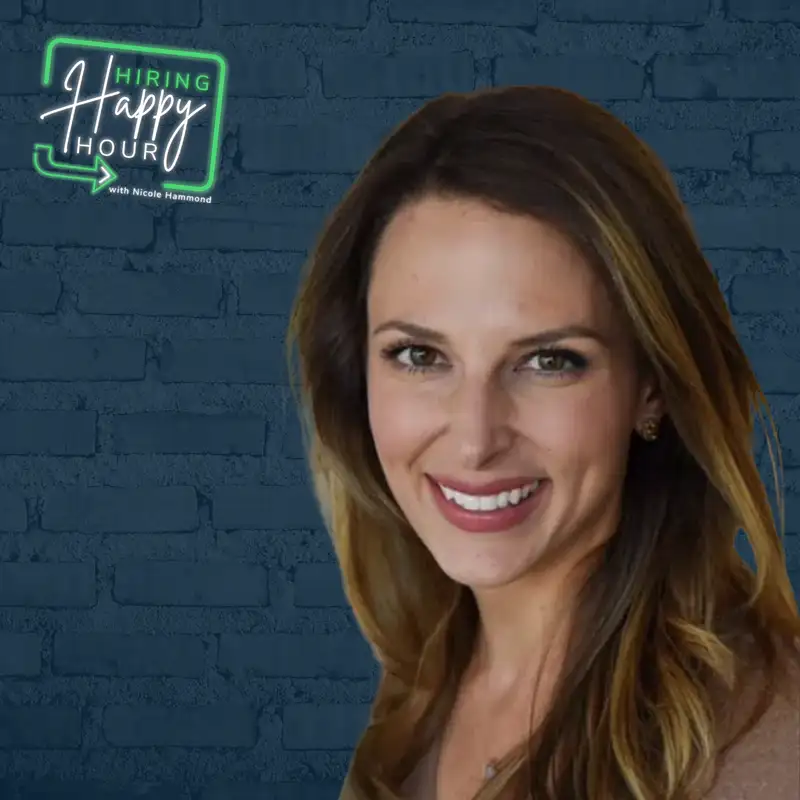
HHH - Lauren Tropeano
===
squadcaster-4e50_1_08-17-2026_100850: [00:00:00] Hi everyone, thank you so much for joining for another amazing episode of Hiring Happy Hour. Today, we have a new topic. So for those that have been listening to a number of these topics, I know we've had a few topics around transformation, et cetera, but I'm very excited to have our guest today.
She is a fiercely strategic force in the people and culture space. She is someone who builds the infrastructure that lets companies grow without losing their soul, whether that's scaling a team across borders or coaching leaders to show up for the people around them. Before her current role, she led people strategy at companies like Skillshare, DraftKings, and Pivotal. She is a 2024 OnCon Top HR Professional Award winner, a 2025 HRLF HR Leadership Award nominee, and a published voice across major industry outlets. Today, she is the chief people officer at Docebo. Please join me in a big welcome to Lauren Tropiano. Welcome, [00:01:00] Lauren
lauren_1_08-17-2026_130850: Thank you so much for having me. Excited to be here
squadcaster-4e50_1_08-17-2026_100850: I always want like the rush of like people applauding and cheering as I do these intros because you guys are so amazing and
lauren_1_08-17-2026_130850: Oh, thank you
squadcaster-4e50_1_08-17-2026_100850: hope you feel, and everyone out there feels the excitement that we have having you here today
lauren_1_08-17-2026_130850: Thank you. No applause needed. We don't do this, we don't do this work for the glory.
squadcaster-4e50_1_08-17-2026_100850: So Lauren, I really enjoyed our prep call as I feel, you know, being in a remote world and speaking to people through video, it's sometimes hard to get a sense of, of them, but that was not the case with you. You are a genuine, authentic, just truly, like, leading with EI individual, and I can tell that by our first impression. And so I think that'll resonate with our audience today, as I know everything that you're gonna share with us comes from the heart and with good intention and your beautiful expertise.
lauren_1_08-17-2026_130850: Thank you so much
squadcaster-4e50_1_08-17-2026_100850: going to dive right in and, uh, we are going to get [00:02:00] started with career hiring happy hour. Please speak to us about something that from your past, present, that you are proud of, that you feel is truly making an impact, uh, in the, your industry and just out there, um, that our listeners and our viewers can learn from.
lauren_1_08-17-2026_130850: I have kind of found myself in this niche of helping companies that are going through periods of transformation, whether that is, uh, you know, periods of high growth where there's a ton of hiring and, and team building and scaling. Um, or also transformation can, can really also be about pivoting the company, pivoting the culture, pivoting, um, you know, the skill sets in the company, whatever that may, may mean.
So, um, when you asked me to kind of think about something I'm proud of, I think it's just making sure that companies can do that with, with keeping their culture and their soul and their, their essence intact, and also remembering that there's humans that are, um, making up the entire company, right? So, [00:03:00] um, a lot of times these moments of transformation, even if they're exciting, even if it's, you know, hyper-growth and all of that, um, and the outcomes are really incredible, it's really hard for humans to go through those things because we're not really wired for this, um, intensity that sometimes our organizations ask of us.
Um, so, you know, one of the things that I'm really proud of is just tr- just keeping grounded in that humanity, um, making sure that the teams that I work with, the leaders that I work with always remain centered of what really matters, which is the people behind the mission. Um, and that's something that I, I'm really proud of, the, the thread, um, that I've, that I've kind of left in the different organizations that I've spent time with doing this work.
squadcaster-4e50_1_08-17-2026_100850: I love this because I would say that I'm definitely a people-forward person as well, and while all of us may feel that we should be this or that we try to balance this, I think there is a difference with people that are truly recognized and known for this. [00:04:00] So as you think about transformation for organizations and kind of workforce readiness, um, what are some of the secrets to that, right?
Like, how do we continue to ensure that we empathize and support our people through so much change?
lauren_1_08-17-2026_130850: Yeah. I mean, I think it's first acknowledging, um, you know, that the company, the organization, the team, whatever it is on whatever scale, is actually going through something together. Um, a lot of times it's just naming that is a really great starting point so that people feel seen, they feel validated in their experience, and, um, that they know that, you know, they're not looking around going, "Am I the only one feeling this?"
Um, so sometimes just really starting with naming that, or, um, for companies that are preparing for something, it's almost like laying the foundation of, hey, we're gonna be coming into this period of intensity and, um, here's what we're gonna need from you, and here's how we, um, [00:05:00] we'll need to show up for each other.
So I think it's first about just acknowledging that, 'cause that really sets a, um, a foundation that trust can be built from. Um, and then also, I, I, I think it's really about persistent communication and setting,
squadcaster-4e50_1_08-17-2026_100850: Yeah
lauren_1_08-17-2026_130850: appropriate expectations. One of the things that I get asked a lot about is, um, you know, how do you...
how does your culture take shape and kind of transition and transform through these moments? And, um, there's really no perfect answer because it- you don't really know, but, um, what is important is intentionality. So if there are things about your culture, um, or that make your company really special that you wanna maintain, it's about real- being really intentional about holding onto those things, um, or being intentional about, um, being clear, like, "Hey, this has been something that's been really special, um, to our past, but now we're at a different point in time, and so we need to lean into a different aspect of what's gonna help us be successful."
And again, kind [00:06:00] of bringing people along that change curve, um, I think is really, really important to do.
squadcaster-4e50_1_08-17-2026_100850: Very, very true. Big fan of a change curve as we continue to bring different stakeholders along on the journey.
lauren_1_08-17-2026_130850: Yeah.
squadcaster-4e50_1_08-17-2026_100850: let's talk about where we are as a world today. Um, we are seeing a mega trend out there of where future state, if not now state, is a workforce of AI plus people. And so as you think about your organization, as you think about strategy for the next year, three years, um, what are you doing to help in this new world where we are now working with more than just people by our sides?
lauren_1_08-17-2026_130850: Yeah, it's a very interesting, um uh, challenge, opportunity, whatever you wanna call it, that, um, folks in my role, and I think all leaders are faced with right now. We're trying to understand, how does AI fit into these traditional structures that we've, um, always come to know and have worked in? And I think the, the reality is, is it actually requires a complete [00:07:00] reframing of what an organization is and how we think about some of the traditional structures that we've operated in.
What do I mean by that? 'Cause that's a little bit of, like-- It's kind of, like, lofty, right? So let me break it down. The structure of the organization that we're in today isn't necessarily, built for where we're headed.
We have, um, organized our, our, um, structures around, around specific jobs, around specific levels. Um, we have these kind of career architectures and things like that that exist, that have served us very well for a long time. However, with, um, AI kind of coming into the fold, we are now being asked very practically to sort of re-look at what the, what the actual work is that needs to be done by the organization, and who is best equipped to do that work.
Who or what, I should say. Um, so
squadcaster-4e50_1_08-17-2026_100850: Mm-hmm.
lauren_1_08-17-2026_130850: What is kind of new, because we've always looked to people to do this work, but now that our technology has become so much more advanced, we now have this opportunity to, to, to [00:08:00] say, "Oh, you know, is there a way that we can actually use technology to do some of this work that, um, humans have done?
And then what does that mean for the human involved in the equation," right? Um, so with those questions being, um... With us being confronted by those questions, I think it's important to look at, um, the, the inside of an organization a little bit differently. So at, at Docebo, we're adopting a little bit of a different type of people strategy.
So we are really leaning into a skills-based strategy for our organization. And, um, just to unpack that a little further, what we're looking at, um, is we're not looking just at, you know, the jobs that we have and the people that we have within the company to fill those jobs. Instead, we're breaking it down a little bit further and, um, we're looking at the skills across the company.
And by the way, we're just getting started in this work, like a lot of companies are. So we're not claiming expertise, um, [00:09:00] inside just yet, but we are claiming, like, that we're gonna, you know, be, be, um, hopefully leading this and have, um, you know, a real, uh, success story here. But,
squadcaster-4e50_1_08-17-2026_100850: Yeah
lauren_1_08-17-2026_130850: um, we're, we're really breaking this down into sort of three categories.
Um, technical skills, which is, um, you know, how well is our, is our, um, team of, of, um, employees equipped to work within the technical parameters of their job. So maybe that's, you know, a coding proficiency. Maybe that is working with AI. Maybe it is, um, understanding- You know, some technical aspect if you're a lawyer, for example.
Um, then there are job skills, which are the skills that are needed for a particular task at hand, or, um, some other words that have kind of recently kind of come into our vocabulary would be like, you know, for the project or for the gig or, um, whatever it is that, that you're working on in that moment. Um, and then there is this proliferation of human skills that are needed as [00:10:00] well, which we've always needed, but now more than ever, I think when you ju- juxtapose this, you know, AI, um, to the s- the human skills that a human can bring, it's a really amazing co- combination.
And so I think the, the human skills themselves, often in the past called like soft skills,
squadcaster-4e50_1_08-17-2026_100850: Yeah.
lauren_1_08-17-2026_130850: They're taking more of a forefront and, and, um, a front seat and, uh, have become more and more important. And those human skills, just to provide an example, are things like discernment, um, things like, uh, effective communication,
squadcaster-4e50_1_08-17-2026_100850: Hmm
lauren_1_08-17-2026_130850: like, um, you know, good business judgment.
Um, those are things that AI just hasn't yet gotten right and, um, we still really need to lean into humans for those things.
squadcaster-4e50_1_08-17-2026_100850: I love that there's three, 'cause I'm a big fan of
lauren_1_08-17-2026_130850: Yeah.
squadcaster-4e50_1_08-17-2026_100850: three. So technical skills, job skills, and human skills.
But I think human skills is the one, to your point, it's kind of indirectly always been there, but now more important [00:11:00] than ever, because I would argue, and this is an argument for another day, that AI can't do that one, right?
Like, that's why we call it human skills. And so, um, tell us about an organization is at the forefront with you or wanting to follow your lead in this regard, you know, where do they start? I think people process technology and breaking that down with transformation, but where can they start?
lauren_1_08-17-2026_130850: Well, I think it starts with really starting to understand, um, about the di- the diagnostic of your organization. And we don't have like a formal tool that we use per se, but it starts with, um, like wayfinding within your company. What are the things that are, um, truly unique and special about your culture and the way that you operate and work, right?
squadcaster-4e50_1_08-17-2026_100850: Okay you think about human skills, there are different organizations that have a proliferation of more of these types of skills than others. Um, and those are the things that make these cultures and these operating systems that people are in, um, really unique, right? Um, so some... If, [00:12:00] as an example, some companies are super high on empathy, right?
lauren_1_08-17-2026_130850: Like they're just, they show up, they are, um, they're just kind of oozing with that. Others are very super high on creativity, right?
squadcaster-4e50_1_08-17-2026_100850: Mm-hmm.
lauren_1_08-17-2026_130850: Um, I think about like the early days of HubSpot. They were out there doing all of these really cool different, um, things to get out into like the, their local communities. Um, and they were just really known as like a creative, um, organization that kind of did things differently and they showed up differently, right?
So, um, so those are just some examples, but getting started to really understand what the fabric of what exists, like broadly speaking, looks like, that can help you kind of write down those things, um, or narrow down like, okay, these are maybe the top five things that are very important to us as an organization, um, that really feel authentic to the expression of who we are and how we work.
And that's always a very strong, um, foundation also for your values and kind of taking a, a [00:13:00] look and examining if you have values as an example. You know, do these still feel relevant for this time and this, and this, um, moment that we're in? And a lot of times that's yes, um, depending upon kind of where you are, but sometimes it's a yes, and, um, which means like, yeah, that still feels directionally right, but right now we, we really wanna be leaning into something, um, that just requires a, a little bit more, um, cle- clarity of a, a, you know, expression around that.
So, um, so that, that's like, you know, an, an opportunity to just also take a chance to examine those values. But it really starts with, you know, kind of honing in on what are those skills, those human skills. Those are often ones that are easier. Um, and then you can also, uh, you know, maybe pick a small group of jobs or a, a one function to start with to say, okay, these are the job skills that we think we're really gonna need for these, for this body of work over the next 18 months or something.
Um, and then these are the technical skills that are very important within our [00:14:00] company at this time. So it's really starting with that like core group of things. Um, don't try to boil the ocean. It's a lot.
squadcaster-4e50_1_08-17-2026_100850: Yeah. It is
lauren_1_08-17-2026_130850: start, like take a, take a bite of the sandwich. Don't try to swallow the whole sandwich.
squadcaster-4e50_1_08-17-2026_100850: Yes.
lauren_1_08-17-2026_130850: Yeah.
squadcaster-4e50_1_08-17-2026_100850: appreciate that you spoke to values because as you were describing these three areas and kind of just going through what our values are at SmartRecruiters, which is solve the biggest problems, dig deep and grit, and last, you know, together we win. But it's very relevant because year over year, we continue to reevaluate our values to say, "Are these still relevant?"
And I think it's an important thing as we think about the large organizations out there that have had the same mission, vision, value for years and years and years. Now is the time for a bit of change, right? To consider this.
lauren_1_08-17-2026_130850: Yeah
squadcaster-4e50_1_08-17-2026_100850: I wanna dive into the second piece that you talked about around prioritization, right?
Like, don't bite off bigger than you can handle.
lauren_1_08-17-2026_130850: Mm-hmm.
squadcaster-4e50_1_08-17-2026_100850: Where would you start? You mentioned a few jobs. Is there, you know, department-wise, one that's [00:15:00] easier, maybe that has more of the same types of role or something where, I don't know, more or less, like empathy is, is needed, that it would be better? Where do you, where do you start if you were to prioritize?
lauren_1_08-17-2026_130850: I think it depends on kind of where your company is with the change curve around this, because this is a new concept. So I, I like to start there because as we know, um, in the world of, of people work, um, sometimes our ideas are well-supported. Ideally, they're well-supported. Other times, they're sometimes met with a little bit of friction, right?
So
squadcaster-4e50_1_08-17-2026_100850: Sure.
lauren_1_08-17-2026_130850: I think it depends if you have a business leader that is a strong champion for this concept, it's always great to start there when you have a strong partner in your business. You are trying to develop a proof of concept around this first, you can always start with the people organization.
Um, if you're met with a lot of resistance, it's like, okay, well then you can turn your work inward.
Um, and I have a, um, a, one of, one of my vice presidents, she's the vice president of, of employee [00:16:00] success. She's very passionate about this work. Um, and she and I, you know, when she joined the company a little over a year ago, we just started, you know, doing this stuff without really, um, having it baked into any type of strategy.
But as we were hiring for our teams, we were like, "Okay, what skills do they have?" And you know, "What, um, what work is this? Let's, let's give this person a gig." And so we just kind of started informally, and I, I offer that up as an example because the only, um, the only place that you need to start is right at home, um, if there's not necessarily a lot of support in your business.
I mean, if you want to be doing something in the business, it, it is really important that you, I think you have a business champion. Um, and there's usually one brave soul that's willing to kind of go on this journey with you. So I would say start there because it's gonna be the place where you're going to experience the least friction and, um, maybe also have some grace to have some learnings.
Um, I think d- this is a, a strategy that's relevant for all industries and organizations.
squadcaster-4e50_1_08-17-2026_100850: [00:17:00] Yes
lauren_1_08-17-2026_130850: you know, if I were to say like, start with engineering and you're a hospitality company that you don't have that, that shouldn't be a limit- limiting factor for you. Um, I would say start wherever you feel like you're gonna get the most support and traction.
squadcaster-4e50_1_08-17-2026_100850: True. Love it. It depends. The best consultative answer we can ever start with,
lauren_1_08-17-2026_130850: exactly
squadcaster-4e50_1_08-17-2026_100850: So then where do we go from here? As we think about your journey at Jocebo, what's next, right? You-- Let's say you've established this ambassador group. You've started this kind of, I'm gonna call it a pilot, um, that you're starting with. Uh, what's next if we wanna continue to take our listeners and viewers along on, you know, next steps?
lauren_1_08-17-2026_130850: Yep. So part of the process of doing, um... This isn't, by the way, a technical term, but, like, inventorying your skills, really understanding what skills exist within your workplace because, um, you really need that information in order to, um, direct those skills or deploy those skills internally. It's, it's helpful to have a technology to do that, right?
So Doortabo offers one. Um, there, there's a lot of great, [00:18:00] you know, solutions out there. Um, once you kind of go through this inventorying process, which is actually something that can be made really fun in an organization too, because I don't, I don't know a people leader out there that isn't regularly hearing from their teams, "We want career growth.
We want career development.
squadcaster-4e50_1_08-17-2026_100850: Oh, yes
lauren_1_08-17-2026_130850: us, help us, um, you know, grow our skills or advance." So this is an, an invitation for your entire workforce to get into whatever tool you're using, if you have one, um, and just, you know, say, "Hey, I'm really great at this," or, "I speak this language," or, "I know this particular, um, you know, platform or technolog- piece of technology."
And so it, it brings everybody along the journey, um, to, to inventory the skills. But I think the next step after you have a good handle on, you know, a, a good flavor of the skills that you have inside the company is to then decide what do you want to do with those skills? A lot of companies that are on this journey, [00:19:00] um, first want to figure out how to redeploy those skills in a very thoughtful way so that, um, they're opening up their internal mobility, um, opportunities for their employees, right?
Um, and that's a good thing because it offers, you know, a hook for retention. It offers, um, you know, a ton of, of career growth and, um, upskilling and cross-functional collaboration and all the things, right? Um, so there is this, this logical next step is then, you know, opening up the skills repository to our internal recruiting teams and, and to our leaders and saying, "Hey, these are people that maybe would be otherwise hiding in the shadows or that you would have never thought of that might actually have the skills to be able to do this thing that you're looking for."
Um,
squadcaster-4e50_1_08-17-2026_100850: Yeah
lauren_1_08-17-2026_130850: so that, that is a really, um, I think, very exciting piece of this work, which is, um, really working in service to a bigger mission. Um, but then also helping to really [00:20:00] solve, um, important business, real-time business problems with the talent that you have inside the company
squadcaster-4e50_1_08-17-2026_100850: I love that. I love that. I think that is so helpful because, to your earlier point, it's not too much to do that and to make it fun and something that is relevant beyond just the goal of this, and so scale it to be more impactful is huge, is absolutely huge. am going to fast-forward us. So LinkedIn, wonderful LinkedIn, shared a stat with me. If 70% of the skills required to do today's job change by 2030, isn't who do you hire, but how do we build the skills we need across that workforce? So share with us maybe as you think about, you know, times changing, and we're still in this world of where, you know, people and AI in the workforce, but 2030, the skills to do a job are changing.
How do we keep up with that?
lauren_1_08-17-2026_130850: Yeah. First of all, that's a, it's a very real and I think true stat, and it's also [00:21:00] incredibly scary for so many people involved. The people that have to do the workforce development and the readiness, um, as just, as well as individuals, um, who are in jobs that they've invested potentially decades of their time and expertise into, right?
So, um, it's a disorienting statistic is the first thing I'll say. Um, so if any of the listeners out there had a sort of a visceral reaction to that, like, yes, I agree. Um, and also we're here to f- to help, um, you
squadcaster-4e50_1_08-17-2026_100850: Yes.
lauren_1_08-17-2026_130850: A little bit less scary, right?
squadcaster-4e50_1_08-17-2026_100850: Yes
lauren_1_08-17-2026_130850: um, I also, in addition to being scary, I actually think it's incredibly, um, motivating because, um, this is really, I think, the way that our modern world is working.
With technology, everything is faster and everything is, um, more fluid, right? So I think the sooner that we can all embrace, um, as people, you know, the, the fluidity of the nature of what we know and, um, we can kind of reframe our thinking to, to think [00:22:00] about that as an opportunity for us to continue to learn and grow, um, I think that's really, uh, exciting and motivating for people that have that mindset.
Um, you know, I, I can speak for as somebody that has over 20 years in, in my area, you know, you can, you know, I'm sort of at this one of the highest levels that I can be in my career, and it's like, you know, some people might hang their hat and say, "Oh, okay, I've done it. I know it all." And it's like, no, absolutely not.
I am learning new things every single day, and that's actually what keeps me going. I love that, right? Like, I never wanna stagnate, and I, I really consider myself a lifelong learner.
squadcaster-4e50_1_08-17-2026_100850: Love it
lauren_1_08-17-2026_130850: so using that as, you know, kind of the mindset that I approach all of this stuff, I think it's really, um, incumbent upon us who are doing this work in the workforce to really make sure that, um, first our learners understand that this is not a criticism as to where they, uh, where they are or that they have been, but that it's an invi- invitation, um, to learn and to kind of, you know, um, upskill every single day, and I think that that is the key.[00:23:00]
Um, learning can no longer just happen in a classroom. Um, the way that we learn really needs to be embedded into the fabric of our work every day. Um, it needs to be just part of the motion of, um, you know, how we partner with technology and our peers and our collaborators as well. Um, and when you frame up learning and, and upskilling in that way, it definitely seems lower stakes and, um, and more accessible for people.
Uh, and that's the way that I think, you know, organizations that are going to help bridge, um, their current workforce to what the workforce of 2030 or beyond is, is needed. Um, it really starts with that and making sure that people feel like this learning is accessible for them and that it's served up in a way that's very, um, frictionless.
squadcaster-4e50_1_08-17-2026_100850: It's so reassuring to hear you say this because I feel, uh, you know, leading center of excellence and having enablement as part of that, I'm now running into areas [00:24:00] where or departments are trying to do what they've done for years, right? "I have a site, go there. There's courses you can take.
Here's lengthy things to read." And what we're trying to challenge and collaborate is there is new methods for intake, right? Bite-sized chunks, perhaps videos or podcasts. Gosh, look at us. Um, and just finding new mechanisms to really, to your point, make it digestible, make it, uh, able to help us elevate bit by bit. The fascinating thing, and may not be fascinating for all, but COVID, you look at it as an opportunity, it forced us to be open to change, right?
lauren_1_08-17-2026_130850: For sure. Yeah
squadcaster-4e50_1_08-17-2026_100850: had to pivot, and it-- whether you flexed that muscle before that quite often or not, now we're in this state years later where I would argue we're all used to so much change that why not continue that?
But to your point, I think the most important piece is making it digestible in little pieces [00:25:00] versus these large, big courses
lauren_1_08-17-2026_130850: Yeah
squadcaster-4e50_1_08-17-2026_100850: that we have to take
lauren_1_08-17-2026_130850: Right. And I mean, there, there's always a time and a place for different formats of learning, and that's where I think, um, like a one-- there is no one size fits all, right? Like, if you think about, um, you know, some of the customers that we serve, they're, they're on the front lines. They might be working in retail or food service.
Like, they can't sit behind a computer for four hours and do a training, right? The, the way that they, um, learn how to prepare, you know, the perfect sandwich for their customer is actually by doing it, right? So
squadcaster-4e50_1_08-17-2026_100850: Yes
lauren_1_08-17-2026_130850: the learning, um, is often real time, it's hands-on. Um, but that said, there's also a ton of learning that needs to happen in different formats for different people, and that's where, like, AI can help us, um, serve up, you know, really bite-sized, specific, explicit, um, pieces of information that might be very helpful in that moment.
Or, you know, maybe AI can help with coaching if you're a salesperson. Like, there's so many different [00:26:00] ways, fits, and flavors, and I, I love that about the way that, um, modern learning is working today because it is not like get in a room with a trainer. And there is a place for some of that, but it's not just limited to that, so it just feels more accessible.
Yes.
squadcaster-4e50_1_08-17-2026_100850: This is great. This is great. Uh, so final thoughts on this topic. I know you're excited about where Docebo's going and what you're helping customers to do. I think SmartRecruiters can attest to that as well, as well as SAP, and especially with this workforce of people plus AI. Um, what are some final tips that you would share with our listeners as we enter into this next chapter?
lauren_1_08-17-2026_130850: I would just remind people that, um, this is a new frontier, right? Like you talked about COVID, um, for those of us that really worked on the front lines in that, it's like, you know, none of us ever really had the, the playbook for how to deal with a global pandemic, but we figured it out. We helped people get through it.
Our organizations, um, [00:27:00] survived. Many thrived, um, as a result. And so I would say that taking- drawing from that, um, you know, analogy, that's- it's another- we're on another, you know, frontier as well. Um, there is no perfect playbook to get this right, but the most important thing that people in our seats can do is get started.
Remain curious and try some things out, because the companies that w- that take those steps forward early are gonna be the f- the first movers and have that advant- advantage, even if they've got, like, some bumps and bruises along the way.
squadcaster-4e50_1_08-17-2026_100850: Sure.
lauren_1_08-17-2026_130850: That's how you learn is through, um, getting going and failing a little bit, um, and experimentation.
And then, um, you'll be-- I think you and your organization will be, um, better off if you just get going. So sometimes people get really, you know, caught up in that, like, um, perfection paralysis, and there just isn't a perfect answer. No one has a, like, a perfect playbook for this. But, um, there are some brave souls that are out there getting going, and I think it's great
squadcaster-4e50_1_08-17-2026_100850: Yeah. Agreed. Agreed. Uh, all right. We are [00:28:00] gonna switch gears to another type of happy hour, and this is personal happy hour. So outside of work, yes, yes, you have a life outside of work that's more than just sleep. Um, Lauren, what brings you joy? What is kind of your happy hour outside of Docebo?
lauren_1_08-17-2026_130850: Yeah. Well, I have, um, a beautiful family, so that's the first thing that came to mind. I have three daughters, um, that keep me very busy but bring me so much happiness, and, um, my husband as well. So that's the first place. Um, besides my family, I really enjoy cooking. I like, um, flowers, like gardening and flower arranging and just sort of all things that are really beautiful.
Um, and, uh, like also interior design and things like that as well. . Yeah.
squadcaster-4e50_1_08-17-2026_100850: that. And maybe your girls are along for some of those adventures too. That sounds wonderful.
lauren_1_08-17-2026_130850: Yeah, for sure
squadcaster-4e50_1_08-17-2026_100850: All right, final piece, my favorite, this or that. So I am going to provide you two things. Um, you can choose one, you can choose both, you can choose neither. You can elaborate [00:29:00] or we can move on to the next one.
So we're gonna take through a few professional base and then a few fun.
lauren_1_08-17-2026_130850: Okay, great
squadcaster-4e50_1_08-17-2026_100850: Okay, great. right. Um, proven experience or future potential
lauren_1_08-17-2026_130850: Uh, I'd say both in a perfect world.
squadcaster-4e50_1_08-17-2026_100850: This is what I love is the faces, the thinking.
lauren_1_08-17-2026_130850: Just to elaborate, I think, um, I think depending upon what you're looking for and, um, you know, the, just there's a lot of conditions around that, but, um, you could either have both, you could have one or neither. Um, and I would take all three, but I guess in a perfect world I'd take both.
squadcaster-4e50_1_08-17-2026_100850: Okay. Love it. Um, technical skills or human skills?
lauren_1_08-17-2026_130850: Human all day. Because you can't, you can teach technical. Sometimes some of the human, it's tougher to teach. But you can start with your children. If you're still, you know, parenting young children, you can, you can develop them then. It's, it's harder when they come to me.
squadcaster-4e50_1_08-17-2026_100850: There we go. Our next podcast will be about how we help [00:30:00] those little
lauren_1_08-17-2026_130850: Yes.
squadcaster-4e50_1_08-17-2026_100850: Career development early. Love it. Uh, okay. Deep expertise or learning agility
lauren_1_08-17-2026_130850: Learning agility. Because to the point that we just talked about, you know, some of the deep expertise that we had is, is, you know, becoming irrelevant. So the ability to, you know, be really agile with developing new skills I think trumps that all day.
squadcaster-4e50_1_08-17-2026_100850: Yeah. Yes, agreed. All right. Great with AI or great with people?
lauren_1_08-17-2026_130850: Great with people, I would say.
squadcaster-4e50_1_08-17-2026_100850: Uh, AI fluency or emotional intelligence
lauren_1_08-17-2026_130850: emotional intelligence
squadcaster-4e50_1_08-17-2026_100850: All right. Reward or recognition
lauren_1_08-17-2026_130850: I think it depends. It really depends on what's important to the person.
squadcaster-4e50_1_08-17-2026_100850: Okay
lauren_1_08-17-2026_130850: people are-- Some people don't like the public recognition. Other people, like, words of affirmation is their love language. So it kind of depends. Um, and I think you should customize and personalize for whatever is most important to the person that you're [00:31:00] working with
squadcaster-4e50_1_08-17-2026_100850: There we go. Four-day workweek or work remote
lauren_1_08-17-2026_130850: Four-day workweek
squadcaster-4e50_1_08-17-2026_100850: Okay. Does Docebo do a four-day workweek?
lauren_1_08-17-2026_130850: We don't. Um, but I've always been fascinated with the concept, and I do think that there's something there in the future. Not, n- I'm not speaking on behalf of Docebo, but I think, um, I think that there's a very fluid construct of, like, hours that need to be worked, um, especially with the onset of technology and jobs kind of getting reconstructed.
So I think four-day workweek could be really interesting
squadcaster-4e50_1_08-17-2026_100850: Yes. All right. So I used to work at Chevron Consulting, and they had the four-day workweek, but it was group A and group B, so there was overlap. So just to get everyone thinking about that concept.
lauren_1_08-17-2026_130850: Cool.
squadcaster-4e50_1_08-17-2026_100850: All right, uh, we're gonna skip to the fun stuff now. Uh, mountains or ocean?
lauren_1_08-17-2026_130850: Ocean. My husband and I get into that debate almost daily 'cause he's a mountain person. He loves the ocean too, but yeah, I'm an ocean, [00:32:00] I'm an ocean person.
squadcaster-4e50_1_08-17-2026_100850: I'm ocean, my husband's mountain. See, we can have this debate together. Sunrise or sunset?
lauren_1_08-17-2026_130850: sunset. One of my favorite places is, um, Negril, Jamaica, and they have the most gorgeous sunsets there, so
squadcaster-4e50_1_08-17-2026_100850: Oh, all right. We're getting travel tips. I love this.
lauren_1_08-17-2026_130850: Yep.
squadcaster-4e50_1_08-17-2026_100850: put that
lauren_1_08-17-2026_130850: Yep.
squadcaster-4e50_1_08-17-2026_100850: list. Uh, coffee or tea?
lauren_1_08-17-2026_130850: Coffee
squadcaster-4e50_1_08-17-2026_100850: read a book or listen to an e-book
lauren_1_08-17-2026_130850: Read. I'm a traditionalist. I, I really just like holding the book in my hand. It helps me absorb the reading, I think, better.
squadcaster-4e50_1_08-17-2026_100850: Love it. or staycation?
lauren_1_08-17-2026_130850: Vacation, because when I staycation, I don't rest. I end up doing housework and all of my to-do lists. So, um, I need to, to unplug, I te- I tend to have to go away to some place that's not my own space.
squadcaster-4e50_1_08-17-2026_100850: all right. Beer, wine, or spirit? Like cocktail
lauren_1_08-17-2026_130850: Um, neither. I actually don't really drink very much. I, I'm a fan of a mocktail
squadcaster-4e50_1_08-17-2026_100850: Okay. We love a mocktail too, and [00:33:00] that is where our happy hour will end. Uh, Lauren, share with our audience where they can connect with you
lauren_1_08-17-2026_130850: The best place to follow me and some of the work that I do is on LinkedIn. Um, I have a pretty big following there, and I would love to, you know, um, expand that following. So if you want to follow along with my journey, please join me there. Um, otherwise, you know, always happy to connect with you. Um, if you're looking for a role at Docebo, you can also apply, um, through our website there as well
squadcaster-4e50_1_08-17-2026_100850: Awesome. Uh, this has been really fun. I can't wait to see you in person someday and, and cheers with you as I feel, again, as I opened, you have so much passion for this industry and for people, and it shines through, I think it's also contagious. So thank you for sharing. For our listeners and I- and our audience, I hope you have learned something today.
I hope this helps you in the next step of your journey, um, and that you'll continue to come along with us on more adventures with Hiring Happy [00:34:00] Hour. Thank you, everyone
lauren_1_08-17-2026_130850: Thank you so much for having me