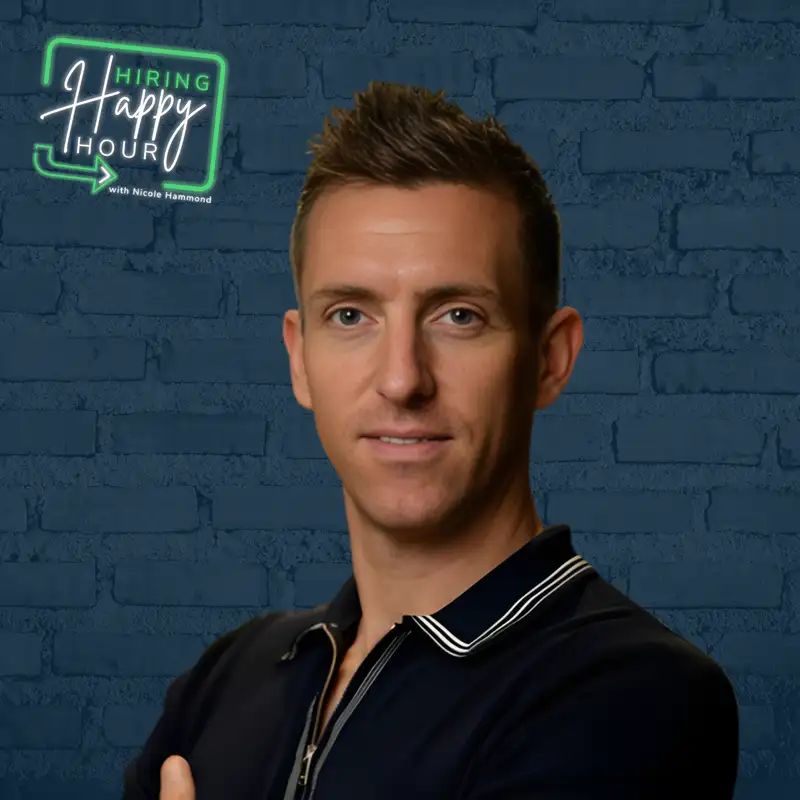
HHH_Adam Reynolds
===
[00:00:00] Welcome to Hiring Happy Hour, where we celebrate the human side of hiring. I'm your host, Nicole Hammond, and together we'll pull back the curtain on people shaping the future of work, the innovators, the dreamers, the change makers behind today's hiring experience. These are the real stories behind the dashboards.
From leaders transforming talent acquisition to the everyday moments that remind us why we love hiring in the first place, to connect people with purpose, hiring happy hours. Brought to you by Smartrecruiters, an SAP company, the AI powered software for super human hiring, helping organizations hire faster, smarter, and we're human.
Nicole Hammond: All right everyone. Thanks for joining us today for another episode of Hiring Happy Hour. Uh, the word that I would use to describe this individual is legend, yes, L-E-G-E-N-D. And you will learn more very shortly. But first, let's learn a little bit more about him, [00:01:00] 20 years of experience.
Global talent spanning multiple sectors and markets with deep expertise in large scale hiring and TA transformation, our favorite. He started his career in an agency and has experience ranging from roles at Boots and GoDaddy. He leads talent acquisition for a 40,000 employee, multinational retail powerhouse, supporting iconic brands including Flannels, sports Direct Jack Wills game, and.
Evans Cycles. He played a key role in scaling his company's engine from 12,000 hires in 2020 to 25,000 in 2022. I wanna hear more about that. And now oversees a global team of 20 plus recruiters delivering across 30 countries. He is the head of talent at Fraser's Group. Please welcome Adam Reynolds.
Welcome to the show.
Adam Reynolds: Thank you. Wow. What an intro.
Nicole Hammond: I know you love these. I feel like I should have music in the background as it just is so many [00:02:00] accolades, so, so legend. Adam, we're gonna dive right in. Um, and I want you to share with us what your hiring happy hour is. I.
Adam Reynolds: Yeah, I, I, look, this was, um, this was, this was a really interesting one to think about because there's been so many instances where you can say, that was really successful, or that was a really great little project, or something worked really well there. But I, I'm, I'm drawn really. Um, really acutely actually to the period of time after I just joined here at Fraser's Group and we were kind of coming out of the back end of COVID. We were kind of mid COVID actually, and, and we were, were having to, to, to sort of learn how to adapt and change to the new. To the new normal. Yeah, the kind of the, the, the world that it was in, that sort of post COVID space and the race to the top in terms of flexibility and pay and all the sort of things that were causing demand across the recruitment space. And everybody, and I remember the doors suddenly opened everywhere at the same time. And, um, retail and hospitality and service. D delivery drivers and, [00:03:00] and literally anybody and everybody was all seeking the same person, You know, the same, the same level of person. And, and, and You know, that's kind of an entry level role, flexible working environment, all this sort of stuff that made a career out of bringing those people into our business.
Suddenly everybody wanted those people, and I'd literally just joined this business as well and kind of. I was almost making it up because I went along really and having to learn things on the hop. And we introduced them. inter, because we, we, we worked with, we had an old ATS system, which was like, it kind of did what it needed to do for us.
But then, um, after a very critical review, we were like, man, this is never gonna, this, this is not gonna sort us out for this, this, this heavy lifting. You know, we were really in the trenches and we needed some pretty strong artillery. And we decided to, to, to make some real lock
stock
Nicole Hammond: Yeah.
Adam Reynolds: Um.
Nicole Hammond: Yeah,
it's, it's incredible, Adam, because I think everyone can remember where they were during 2020 and when COVID hit, um, and I think retail, especially high volume hiring had even more of a dilemma as what, [00:04:00] 72% of the frontline didn't wanna come back to these roles, right? They moved on to something else.
So not only were you fighting for the top talent, it might not have been as much volume, but then you were also fighting over talent that wasn't necessarily what you had before. And wanted more.
Adam Reynolds: completely. We were, we were just fighting a battle for talent with the store next door. We, we were finding it with like the. The, the, the Amazon delivery
Nicole Hammond: Oh.
Adam Reynolds: With the, the pub around the corner with the, I dunno, the, the, the Shell garage at the end of the road, which was suddenly open again 24 7.
It was every single business that we were, we'd never even thought of these sort of parallel or adjacent sort of, um, challenges that we were gonna be faced with. I'm sure you can, I'm sure you've spoken to, to, to businesses that kind of came out the back end of COVID and, and, and had to completely adapt and adjust their, their talent, um, their strategy about who they went for and the sort of the, the level of person they went for.
We did exactly the same. We were going for the same person, but the way that we got there was completely different.
Nicole Hammond: Okay, so tell me more about that, because I think that's huge, and I think it's relevant to today's [00:05:00] world, right? We're still fighting for top talent. It is a race. So time is of the essence. But what else? What else do we need to take into consideration as we think about really getting the right people and attracting them?
Adam Reynolds: So look, we, we were, we were conscious of a few things and um, and Pace was the driver right to start with. We live in it. I guess I'm, I'm of an age now where I can kind of talk about the kids about feeling kind of like my, I still
feel a little bit like maybe my
dad. Same.
Nicole Hammond: words, wise words,
legend.
Adam Reynolds: can say, I can say it from a level with a level of confidence.
Right. That I know that the generation that is, is, is sort of joining the employment market now, has. Very short attention spans and rightly so, right? There are, there's an ocean of options and, and, and stimulus and information of things out there. If
Nicole Hammond: Yes.
Adam Reynolds: if you are not grabbing people's attention super quickly, then, then, You know, you might as well not bother, and that applies to absolutely anything, right?
So you, you, you advert needs to stand out, so you need to have captivating copy. You know, you need to talk, You know, even simple things like the colors and [00:06:00] things in your logo, the way that you show up visually, the optics need to be. We, we didn't think about that. We just have words on a page. You know, we were just like,
Nicole Hammond: Yeah.
Adam Reynolds: This is the advert we've had for like 20 years.
Why do we, why do we even need to think about it? It served us well and suddenly we were, we were being challenged with, You know, that's like four times too long. Like, that's like literally people. And we, we were looking at the heat maps and stuff and, and, and how far people get down before this give up on the advert. It was like half a scroll, You know, it's like now done and, You know, they were swiping left, You know, it was done. we were conscious. We, we knew that, um. But timing. And, and I, like you say, in there time, it comes in many different forms. How long does it take someone to apply for a job? You know, how many clicks are they gonna have to take?
How long do they wanna read the advert for? How long do I have to look at these words before the bit of information that I need to know jumps out at me? Um, yeah. So we, we kind of, we, we took a real critical, we, like, we read penned all the way through that stuff. And we
Nicole Hammond: Good.
Adam Reynolds: Get rid, get rid, get rid, get
Nicole Hammond: Good.
Adam Reynolds: Change, change.
Nicole Hammond: Good. And I think that's important, right? You are absolutely right. We are in a world with [00:07:00] short attention span and brand and color, and attracting that component first matters. And then to your point, making things stand out bullets. Bullet points versus sentences, right? Just the simple things or videos versus just words on a page.
Um, so how did it go? You talked about a new system. So are you doing this in parallel where you're getting a new system because you're driving time, and then you're also having this monumental event in the world of COVID occurring?
Adam Reynolds: Well, yeah. Look, the, the, these things all in, in, in true waterfall fashion all landed at the same time, right? So
Nicole Hammond: Wow.
Adam Reynolds: We, we, we came out of, so what are we, what are the timeline we're talking about here? So we went through COVID one. Well, let's call COVID one. So this is back end of 2020.
Nicole Hammond: Okay.
Adam Reynolds: Of, was the, the, this was the painful period here where we had like, I call it pain associated learning, right? Horrible, horrible things that went wrong that we didn't like, that we were like, we've gotta change that. Right.
Nicole Hammond: Yep.
Adam Reynolds: Kind of happened again, it causes problems, et cetera. And you talked about in the intro about the, the, the [00:08:00] change from sort of 10 to 12,000 hires up to sort of 25,000 hires. Well,
Nicole Hammond: is huge.
Adam Reynolds: That, so period we'd done very little hiring in 2020 because of COVID.
Nicole Hammond: Yeah.
Adam Reynolds: Into. back end of that year when we needed 8,000 or something people, it was insane. And we were, we were having to do, oh God, it was insane. We were, anybody that wasn't on furlough, we were pulling in to do video interviews. So we got like the security guard that works in the warehouse or the guy that's kind of on the front desk, our reception's going, Hey dude, you ever used a phone before you, have you ever spoke to a person?
Brilliant. You've got telephone interviews to do today. And we were okay.
Nicole Hammond: He's adding that to
his resume.
Adam Reynolds: ragtag, bunch of mobile interviewers. We were just pulling in from all over the place. We got there by Huckle, by Crook, and it, it, it was neither pretty noisy, efficient, but it got us where we needed to be.
Nicole Hammond: Sure.
Adam Reynolds: As a result of that, we were like, but we've gotta get an ATS system here that actually this, this, not saying we're gonna be in a global pandemic situation.
Again, fingers crossed. But we're absolutely gonna need to be able to move with purpose and with efficiency. And what we've got at the moment just doesn't, doesn't cut it. So we went out, we've got [00:09:00] SmartRecruiters system. We embedded that in sort of, May/June time in 21. And then we went into the, what we would call COVID two, I guess.
Then
Second half of that year. Then when it all sort of back into furlough, out of furlough and the shop started to, open up again. We went into Christmas in 21, all guns blazing. It was the busy it was gonna be the busiest period of time that we've ever had. And it turns out it absolutely was. And we had so many roles to fill we went, in. leather using the system and taking, as we're saying here, the, learnings around about, pace about brevity, about, about efficiencies. So shorting everything. You talk about bullet points. Yeah, absolutely. That creating videos. Yeah, a hundred percent that, but the real key to it is how quickly can someone go from seeing a job, to starting a job.
Was the key.
Nicole Hammond: So, so this is great because I think you are speaking to something that resonates with all of us, right? And again, talking and coming back to time, but using the data, using the brand, using all of this that we know behaviorally that will [00:10:00] drive to get us the right talent pool. So you are talking about a time a year later from COVID one where seasonal hiring before you hit that peak, which you were successful with.
Congrats. But now you're talking about this component of how do I get them from Hello to hire. So how did you do this?
Adam Reynolds: Yeah, look. Um, and, and, and, and this was trial and error and, and learning and course correcting, making adjustments on the hop, right? So we knew, we knew that, that that time was killing everything.
Nicole Hammond: Sure.
Adam Reynolds: Knew that we usually had a two week window from the point where our, stores would say, Hey, I need some people in my store to when actually I need these people to start.
Right? So they tell us and two weeks. So we, thought about can we make this. How can we play to the play the tune that works to the marketplace, right? Where they, need to, they wanna dance to a tune and we wanna make sure that it's the right kind of tune, right? So let's tune into that. We need our stores to, this needs to fit into their operating model. So their availability to do [00:11:00] interviews, like the, how quickly
Embed and, onboard people. but also you gotta think about like if you get, somebody recieves a job on a Monday and then you start them in that job on a Wednesday. there's a chance that they're probably gonna have moved too quickly through that process in order to have made the decisions or to have that maybe reflective period buyer's remorse kicks in. Maybe you wanna think, actually, do You know what? That's not the right thing for me. Otherwise, you press ganging people into, Hey, here's a job.
When can you start? come on. You know, we're literally gonna push 'em through. Too much. Too much. So we found this sweet spot. We found this like this, and they will laugh at me for calling it this, but the Goldilocks zone right? So this is Goldilocks zone This is, it's not too hot it's not too cold.
It's right in the middle, right? It's right
Goldilock zone. And it was 10 days. days from start to finish, 10 days from the point where you apply for the job to the point where you are. You are officially, you could start the job. You, you have to start the job. This means you could start the job, you've gone through the interview process, you've had your contract onboarding, dah, dah, dah, 10 day window.
And it's, and it fits and it really fits and it fit well and it fit the [00:12:00] candidates because we moved from application 48 hours later to. to interview. So you, you, you apply two days later, you hear back from us. You then get an option to interview within the next three days.
Nicole Hammond: Okay.
Adam Reynolds: Within the next three days.
You've then got, we have a couple of days to make the decisions. You can offer the job and three days later you
Nicole Hammond: Okay.
Adam Reynolds: Whether or not you wanna start. That's, if it's a 10 day window,
Nicole Hammond: Okay. So two, two days to attract.
Adam Reynolds: two days to attract
Nicole Hammond: Three days to schedule interview.
Adam Reynolds: correct? Yeah.
Nicole Hammond: Two days to respond. So now we're, or three days, two or three days, eight, and then offer higher two days. I appreciate this because we see a lot of stats out there that say higher in one to two days or less than 48 hours, and I appreciate the thoughtfulness of the company because you're right.
It's almost like you're just taking anyone off the street with that one to two days. Right. So I would be weary to see a stat like that where this is more thoughtful, but also realistic and everything you're saying to anyone that works across a hiring team can relate to say, this feels realistic. And especially for retail, [00:13:00] where it's less of a deeper dive because the skillset may be less, but you're also being thoughtful about that.
So share with us the intricacies of this process that, that. Continue to keep those resources engaged and really attracting because your brand is, speaks for itself, right? You legend speak for yourself, but what were those moments, those key components that someone that may be listening can really try to make sure they're validating in their hiring process or consider.
Adam Reynolds: Yeah. Look, there's hero moments along this journey then. So you've got this, you've got a two day window in which to get back to people, right? And
Nicole Hammond: Mm-hmm.
Adam Reynolds: The most important piece we get. Flooded. And as I'm, as I'm sure all retailers do at this moment, particularly at that moment in time actually, but at the moment, you get a lot of applications in that first 48 hours, we were, we are a slave to the metrics.
Like we, I I am. And my, the whole business in fact is we are algorithmic, right? So we know, we know the ratios, we know the, You know the benchmarks, we know the attrition rates. We've got this really clear [00:14:00] picture about what the numbers need to look like. It's not massively complicated. This is, this is not, this is, this is not ous level of. Whatever, You know,
Nicole Hammond: Not rocket science.
Adam Reynolds: it's ba it's stuff, but it, it, it's the, it's the cuts at every single stage. We know if we need 10 people at the end here, we know how much we need to put into the machine at the front end. What's that funnel need to look like at the beginning? And we, and, and as I talked a second ago about, like, we were, we were learning this as we were going. was the, it was the funnel analytics, which really helped us to, to, to. Create automation that allowed this process to work. So this point now, and to, an extent, at that point, we knew exactly how many people we needed at the front end of
the funnel Turn the advert off. So if we need 10 people, we needed a hundred people to apply.
had a hundred people, we can switch that off. We had an automated process that built in like, pre-screening
questions If you the right things, these pre-screening questions, it
books you in for a self-scheduled interview. You've got it. Self-schedule interview. It doesn't prescribe to them when we want to see them, it tells, it [00:15:00] gives them options as to when they wanna see us.
Right? So it puts the onus and the, sense of accountability and responsibility in their hands, right? Okay, when do I want to go in and see these guys? Not here is your interview slot. Come and see us. It's like, Hey, we're available at these times. Why don't you come see us?
Nicole Hammond: I like that.
Adam Reynolds: The narrative a little bit.
I would tell
Nicole Hammond: I love that.
Adam Reynolds: Thing. It changes, it just changes the, the feeling of, of. Ownership of that
Nicole Hammond: Yeah. Yeah.
Adam Reynolds: This, we were seeing 50% drop off for people booking into attending interviews,
Nicole Hammond: Wow.
Adam Reynolds: To a two day window to apply from an application through to, um, to, to, to actual booking in, of interviews, and then an option of three days when they can do the interview.
We shifted that needle to 80%, to 80% of our.
Nicole Hammond: Wow.
Adam Reynolds: Booked in, turned up for interview. That's a real game changer that, You know, because our stores and, and, and, and the same anybody in retail, they will account for and, and put aside time to do these
Nicole Hammond: Yeah,
Adam Reynolds: If people don't turn up for those interviews and they don't know that until the person doesn't actually turn
Nicole Hammond: sure.
Adam Reynolds: Of time.
Nicole Hammond: Yeah.
Adam Reynolds: If we can find efficiencies within that, that's absolute key. So that was really important. [00:16:00] That was finding, finding that sweet spot there with. Putting the, the, the, the responsibility and the, the accountability in the person's hands was booking it to find the slot. So they did that. They booked the slot, they had the interview Within three days of being
offered the interview slot, at the end of the three days, we'd get our team and they would meet 50% more people so that they needed to.
So if we needed hire 10 people, we would meet 20 people with a, with a 20% sort of. there's about 22 people we would make because there's always a level of people don't turn up right, as we said. So with 22 people in that we know that would lead to 10 people being
Nicole Hammond: Yeah.
Adam Reynolds: At the end of the three days, we'd find the 10 people, we'd make the 10 offers.
We would move them through the gears to get to the, so they would always, there'd be this urgency and agency behind what was happening, where people were just moving on it, essence, on a conveyor belt almost. But there's activity happening at every single stage, so you are never longer than 48 hours between your next piece of communication, whether you're successful or not. We would then we do, that, first of all, let pause there for a second because that's, there's a load
Nicole Hammond: I mean. I am going to call this the Goldilocks theory, right? [00:17:00] Like there is the data that drives from the beginning, right? Whether we have some companies that use red, yellow, green. A store needs people tomorrow, it's red. How many, to your point, you go through that algorithm, the Goldilocks theory, we're going to, we're going to coin this, we're going to coin this, Adam.
And then you go through, okay, I need 10 hires, then that means a hundred top of funnel, that means 20 at the uh, You know, interview stage. And I think there is a real method to your madness here. So. Now we're at the point where we're hiring. And what about the percentage that show up? Right? I, I really love the accountability factor of how they get to choose and they're driving their own future.
So you're already setting the right behavior with the quality of candidates you're hiring,
Adam Reynolds: Mm-hmm.
Nicole Hammond: Talk about that higher moment and showing up on the first day. What was the percentage of that?
Adam Reynolds: Yeah, we, we, we, we were, we were suffering badly with going through a process, putting all this work in, and then people not showing
Nicole Hammond: Yeah.
Adam Reynolds: The amount of people going from offer to hired. was scary. We, it was like, [00:18:00] we were looking at around about a 40% drop off at that point. So
Nicole Hammond: Wow.
Adam Reynolds: of the people we were offering the jobs to were actually arriving on day one. was, um, it was catastrophic because it mean we were having to over index at every single stage to account for that. So what we did is, I mean, of course you've got the accountability piece where they, they, they're choosing their own interview slots. That's nice. You've also got a level of. There's, there's an engine behind that where the people, where you're moving through the gears, right?
So they, they find out about what, You know, I, I offered the job. When can I start? All that sort of stuff. We make sure our store based colleagues have got a really clear structure to what they're talking about. What's their availability? What, what does the start look like? What does the onboarding look like?
What does, what does your first month look like? You know, let. want a soft landing into this, right? We don't wanna be just throwing people into the front line expecting them to be, to be successful. So we're really careful about setting people up for success. So that's communicated really clearly at the interview stage.
We make sure that it's that two way street. So that was really, really important. stage, this is the key and the bit that really made the difference was. giving people that three [00:19:00] days, give them that three days. We'll make you the offer you, can start whenever you want, but from three days from now, you can start at any point you want.
After that, we'd love you to start. Then you can start in a week after that or whatever it looks like. But this offer is yours. You've got three days to consider it. Fill your details in you. You wanna start straight away. Brilliant. We'll get you straight in if you're not, kind of gives them a chance to reflect that, that buyer's remorse piece that I mentioned earlier, You know, that kind of, is this the right thing for me?
I press ganging people into starting and I know I've worked in businesses in the past that have moved people along with a level of, uh, uh, well, how can I describe it with urgency that maybe they, felt was pressure that is
pushing them towards you Know, onboard start, that kind of thing.
And they've probably got load with offers on the go at the moment. So we have a communication protocol, we have a. We have, um, a, a nice human touch to this as well. So this is where, aside from, I forget, there's lot of automation happened up to the point where they met that person. There's then the onboarding piece where the [00:20:00] store being brings in communication.
So, okay, let me, you've got 10 people here. Your job now is to communicate with all 10 of those people in the next three days. I need you to reach out to them all. Send text, send 'em an email, give them something which allows 'em to know, Hey, we are thinking about you. You know, I can't wait for you to join and your first day looks like this and dah, dah, dah. So that period of time, that three days, that is the most important period of time in the entire recruitment process. 'cause if you lose someone in that period of time, there. Man, that's a waste because
Nicole Hammond: Oh,
Adam Reynolds: in all that work up to that time. This
Nicole Hammond: yep.
Adam Reynolds: This is literally, this is the, the, the, the, this is the hero moment.
Make sure you get this right. And so that was that, that that soft kid gloves, soft landing piece in that three days, give them that window of opportunity to say, Hey, do You know what? This isn't the right thing for me. And so, okay. No hard feelings. That's great. We've over-indexed anyway. We know we're gonna get 20% drop off, so it's
Nicole Hammond: Yep.
Adam Reynolds: We've got a person ready to step in.
Nicole Hammond: That's brilliant. I think it's brilliant because we hear a lot about humanizing hiring, right? It's a theme of ours here, uh, but I think we think about it more for the specialized or higher level roles [00:21:00] in an organization.
Adam Reynolds: Mm-hmm. Mm-hmm.
Nicole Hammond: To your point. Especially post COVID where everyone was just siloed. They didn't spend a lot of time with people in person.
Now they get that chance, right? They get that face-to-face connection after going through a process that they are driving that they feel empowered about, that they feel excited about. I'm sure benefits cost default, right? Competitive in the market compared to all the others that are trying to hire as well.
But that is a differentiator. In my mind right now, you are almost making that customer service that you want in the stores with them to be the model you are showing them. Um, and that's special. That is special. That says something about Frasers. It really does because I don't think a lot of retail are taking the time to do that.
The first thing they are having is the day they show up for the job. Um, so kudos to you guys again. Legend. I, I wanna take this a step further though, because I think, again, all of this is relevant in today's world. If I had a retail store, I would take Goldilocks [00:22:00] theory to it. Um, but more now about retention.
We are hearing in the retail world now that it is still hard to find the top talent, and it's expensive to go through the hiring process that 80% of. Executives are investing in retention. What is your organization doing in that regard? Because I'm sure that is a theme now.
Adam Reynolds: We've managed to do, there's a level of attrition within our business and retention, so let me, let me rephrase that. There's a level of churn within our business. It just naturally
Nicole Hammond: Sure.
Adam Reynolds: Have a lot of seasonal workers and things like that. One of the things that we really, really focus on is, and we have a, a high. A high performance and high support culture within our business. And the, the idea there being is that we give people, we give people responsibility and accountability that that allows them to show up. We support them with colleagues and training modules and modalities and different ways to kind of skill yourself up and to get access to, whether it be AI training academies, to sort this, to support with this kind of thing, or skills academies and learning and [00:23:00] development
Nicole Hammond: Okay.
Adam Reynolds: But actually the reality is. We put them into an environment where they get to experience things that are outta their comfort zone. Fraser's Group as a whole, we are a business that offer the bold, right? We are a business that likes people that want to. Challenge their own, um, their perceived levels of competency and their comfort zones and their areas of, um, their strengths, but also push and develop the areas of weakness.
So that in itself drives a, it drives like a behavior of I want to do more. And it drives people's loyalty because they're getting access to things that they never thought they had access to before. I'll give you a good example. Within my team and, and just within my team and I, I can talk broader than that actually to the people team in general. We've got so many members of the team that started as Saturday Boys and Girls on the shop floor. We've got so many members of. Senior leadership team of our heads of departments as our, our directors. We've got a whole ecosystem of people that work within our business [00:24:00] that started on the shop floor.
That gives a, it gives a shop window to people joining. And one of the big things for us at the moment, certainly for me is, showcasing spotlighting opportunities in retail. That don't end on the shop floor, but they start on the shop floor. So when you talk about retention and you talk about what do you do to sort of drive that holding onto your talent? It's making opportunities available for people to progress and move within. It doesn't need to be linear, but it can be a careers in Frasers group or a cargo net. They're not a ladder. You, move in, you move left, you move, right? You move in all different types of directions. But ultimately you're still, you are, adding things into your skills.
Icer, right? You're banking skills that you're gonna be able to use later in your career. That way you give people, I mean, we are huge. We are so big and diverse as a business. None of the guys that were in my team that started on the shop floor. If you'd have asked them to. I've got two people in my team that have got 25 to 27 years experience in retail.
[00:25:00] They've
Nicole Hammond: Wow.
Adam Reynolds: in leadership level roles. got a couple of people that have worked in, um, heads of department within beauty and in luxury and premium. The knowledge that they come with, that tacit knowledge that they come with, that supports our ability to seek and find the right people, but also understanding their customers,
Nicole Hammond: Totally
Adam Reynolds: it's gold does,
Nicole Hammond: right.
Adam Reynolds: Applies across the entire business.
Nicole Hammond: Yep.
Adam Reynolds: We retain talent by, by giving them opportunities to do things that they would never in a million years have expected that they were gonna be doing.
Nicole Hammond: That's fascinating and I appreciate that you take it one step further. It's not only the offering, but literally having them. Step into those roles and experience it. I think that's a huge differentiator, right? We hear about organizations everywhere offering programs and free this and free that, but they're not really empowering to your point to say, Hey, take 20% of your time.
Over the next year to do X and here we'll support you and you'll learn this. And then to your point, those transferable skills that make them relatable in the hiring process [00:26:00] or make it tangible for them to empathize with someone in another department that may need support. Um, that is huge. And I did not know that.
And so, I mean, we're just gonna put it out there. Fraser's is always hiring, so you should think about this. I mean, that is. That is incredible because not only are those skills transferrable across your organization, but to your point, as they look broader than that, the possibilities are endless. Um, wow. Okay.
But we do have to show your microphone because you are so legend. This is a great pausing moment. Look how legend Adam is. I mean, this is legit guys. This isn't his first rodeo. He's done this before. But You know what I will talk about as we talk about support team and everyone is the team that he reached out to to ask to get this and set it up and they were so kind And so sweet.
Whatever you need, when do you need it? Rescheduled. Okay, here we come. I, it, it just speaks to the culture at your organization. Um, and trust me, I've, I've been across many companies And so I, I truly appreciate [00:27:00] that because that is a differentiator in this world. Um, so kudos. Kudos. Okay. We are going to switch gears.
We have learned a lot about how you have not only doubled the size of your organization in two plus years, but how you overcame COVID, Ovid one, COVID two, with the Goldilocks theory. I'm, I'm not letting it go, and those hero moments. Um, and now we wanna learn more about Adam. So Adam, if we were to ask you, um, what your happy hour is or what just brings you bliss outside of work, uh, what comes to mind?
Adam Reynolds: Do You know what I, I, I was reflecting on this and I was, I was torn between two and it's always on, it's always holidays, right? So I always think about locations that I go to. I'm really fortunate, and I live not a million miles away from gorgeous countryside out here in the middle of the uk, I was drawn to two locations that I've, I went to, um, on a holiday and I was thinking, which one of these two places did I feel the most? The most, not even at home, [00:28:00] because you're clearly not at home when you are on a holiday. You are in a completely abstract environment. But then I felt the most peace. One of them was in the mountains. I went skiing a few years ago to Switzerland and I went to SAML and it was just,
Nicole Hammond: Okay.
Adam Reynolds: Incredible.
It was the most beautiful place in the entire, and the other one was, I went to on a holiday too, and I went to the moldies. It was, it was like a one-off holiday. It was like an absolute bucket list type thing. Swimming around in, in the coral reefs around, around the little mini island that we were on. And I just, and you have those moments where you just look, I looked down and. Finding Nemo fish whizzing around like, man, I don't think it gets much better than this. This is amazing. But, and that was incredible and I absolutely loved that. But it was the, it was the mountains and it wasn't even, I'm a terrible skier, right? I'm never gonna sit, I'm not gonna sit here and tell you I was whizzing down the mountains and I had this great moment.
It wasn't at all. I was outside a bar on the, on like the, the top of the thing. And I
Nicole Hammond: I pray.
Adam Reynolds: my top, my, my, my jacket down because it was sunny. It was on Christmas day in fight. I was looking at the mountains and I was just like, wow, this is. This is like awe inspiring. You cannot replicate the mounting space [00:29:00] and the kind of the enormity and the, just how epic it is and how you feel so tiny in comparison to the, so I, I just sat there and I think about it a lot actually.
It's one of those moments that you, you. I'm really fortunate that, um, able to crystallize a memory there and sort of hold that and think about it, and I can take myself to that space quite regularly and got photographs and things like that. But you've got really, and it's quite a few years back now, so five or six years ago now, I can really crystallize this memory in my, in my mind, just from. Just by giving it air and thinking about it. And I can take myself to that place and I can very often just think, yeah, that's, that's a, that kind of, that's the feeling that it gives you is so inspirational. And when you're feeling like, and this is the ma this is a massive, cheesy thing, but when you, when you are feeling like. I need some motivation today. Right? coming up against like my, I dunno, my ratios are looking poor man. I, my goldlock zone is, is too hard, it's too cold, whatever it might be. You just need something just to recenter. I can take myself to that place. I'm like, You know, that was, that was special. That was an amazing place.
It's the only [00:30:00] time I've ever been there and I absolutely wait to get back to that place. But I think about that a lot.
Nicole Hammond: I, I absolutely love that for so many reasons. First and foremost, the fact that you just take those moments to. Go back there and reset yourself is huge, right? I think we all need to do better at that. Some people meditate, some people journal. Some people write three things on a piece of paper that they need to get done in a day.
But like at the end of the day, we all need those resets and to visualize and bring yourself back to a place that you deserve because you work so hard to enjoy, uh, is huge. That is happy hour, right? Like that is our moment that we just need to remind ourselves of and motivate ourselves of. The irony in this is I just took my family to Japan skiing, and now my husband is on this.
Okay, so what other skiing country can we also experience culture and the shortlist had St. Ritz. So now you've kind of sealed the deal on next year's vacation.
Adam Reynolds: So good.
Nicole Hammond: That's
Adam Reynolds: You know what, well, I met, we met a [00:31:00] load of Americans while we were
Nicole Hammond: I'm sure.
Adam Reynolds: My partner and I, we, we met this whole, my whole, whole group of Americans that have been there year after year. And they loved
Nicole Hammond: Oh, tradition.
Adam Reynolds: it
Nicole Hammond: Okay.
Adam Reynolds: So
Nicole Hammond: Okay.
Adam Reynolds: Popular.
Look, it's, it's very, it's very fancy pants. And so I was, I was in the, the, this cheaper end of town, not in
Nicole Hammond: Yeah, yeah.
Adam Reynolds: and I was in the kind of.
Nicole Hammond: Pinky up. Yeah.
Adam Reynolds: You know what I mean? But yeah, look it, the ski was amazing. The mountains are epic. The snow was fantastic. It was, it had all the ingredients. It
Nicole Hammond: Oh.
Adam Reynolds: So
Nicole Hammond: I love it. It sounds like you need to plan another trip there. I mean, you could make this like a five year tradition, is that what we're guessing here?
Adam Reynolds: I'm thinking every six months if monitor with you. Right.
Nicole Hammond: It won't have snow, but that's okay. We'll go twice a year. Twice a year.
Adam Reynolds: it. I take it
Nicole Hammond: Or you balance it out with the Maldives. Right. I mean, I've also heard that place is incredible.
Adam Reynolds: that was incredible.
Nicole Hammond: not easy to get to for US Americans per se,
Adam Reynolds: I guess not. I guess not. No, no.
Nicole Hammond: But.
Adam Reynolds: Was, yeah, we were,
Nicole Hammond: It's on the list. On the list, and travel is definitely something that provides a lot of people [00:32:00] bliss.
So if you're planning your trips, here are two recommendations, whether you like beach or mountains, right?
Adam Reynolds: could do those two options.
Nicole Hammond: I mean, those are just heavenly, heavenly, and that's what we need in our day. So I, I love that. Thank you for sharing, and I, I'm really serious. I think you sealed the deal for us now,
Adam Reynolds: Good. Good.
Nicole Hammond: bougie, I gotta figure out how to afford that.
Right.
Adam Reynolds: Serious. Agree on seriously, honestly. Yeah. Yeah. Yeah.
Nicole Hammond: Um, all right. We are going to switch to a fun game of this or that. Have you ever played this?
Adam Reynolds: I, I am familiar.
Nicole Hammond: Okay. So, um, I will give you two options and then feel free to expand the why if you want. Otherwise, we can just keep going. Um, give us your Goldilocks if, if it fits into it too. Um, yes. All right. You ready?
Adam Reynolds: You ready?
Nicole Hammond: Okay.
Resume or LinkedIn profile?
Adam Reynolds: LinkedIn profile
Nicole Hammond: Okay. AI or no? Ai.
Adam Reynolds: ai.
Nicole Hammond: Okay. Find me [00:33:00] or find you.
Adam Reynolds: I'm in a space right now because of our, because I really want to, I really want to push the envelope with employer brand and I want people to, I want people to be aware of who we are. want find me.
Nicole Hammond: Okay. Okay. James, that was on a previous podcast, talked about employer brand and how you just need to stand out and be a superhero. So I have no doubt that Fraser's is doing that with everything they put out. And you, Adam supporting that. So good for you. I love that.
Adam Reynolds: You.
Nicole Hammond: Um, career path or whatever comes my way.
Adam Reynolds: See, personally for me, career path, because I'm just a boring analyst at the end of the day, and I like predictability, but I'll be honest with you, I think we live in a world where whatever comes my way is probably the order of the day.
Nicole Hammond: Yeah, you're probably right. You're probably right.
Adam Reynolds: I think the second one is probably the right answer, but it's not necessarily my
Nicole Hammond: Sure.
Adam Reynolds: happy hour.
Nicole Hammond: You're a data-driven guy. I can tell. I can tell. Um, [00:34:00] but I also appreciate too where the world is going. Sure. Why not? Let's try that. And we're in a more versatile world where Swiss Army knives are even more important. And again, Fraser's is supporting that with that model. I mean, I'm, I love doing these because I just have so many things of, if everything goes wrong, I'm gonna go apply to a shop or I'm gonna find you.
All right. Um, reward or recognition.
Adam Reynolds: Recognition because I think it is more in the long term.
Nicole Hammond: Okay. All right. Um, good manager or fun job?
Adam Reynolds: I think fun job. I think
Nicole Hammond: I.
Adam Reynolds: You know, I think if you, I think if you love your job, if you get enjoyment out of it, I think there's only so far good manager can take you. I think it's, I think it's, I think it's about you've gotta have that. It's intrinsic, isn't it? It's then it's the driver is the, the, the, the enjoyment that you are getting out of it.
And I think that's [00:35:00] important. You've got manager is an extrinsic thing and I think that's, it's got a shelf life. I think the intrinsic motivation piece has proven, You know, all walks of life. If you're internally motivated by something, you've got more, it's more sustainable.
Nicole Hammond: Yeah. No, I love that. I love that. Um, four day work week or work remote.
Adam Reynolds: Four day work week because for, for me, the power of, the power of being in and around your colleagues. So four day work week in the office, I would want four days with my team in line of sight wide to the eyes in a meeting room, having in-person conversations I can kind, you just can't beat that. You just can't beat it.
I remote working. Hey look, it's a. It is a flavor that, that people will, will, will, will like, and, and, And so business prescribe it. I I I, I find it, I dunno, I just find it less productive, less, less, less sort of, um, it's less beneficial to it's pace, [00:36:00] right? To move at pace. You, you need to be able to make things happen quickly.
Nicole Hammond: Okay.
Adam Reynolds: That side of thing. So four day week in the office with your peers, three day weekend.
Nicole Hammond: Get it done. Yep.
Adam Reynolds: I'm
Nicole Hammond: I
Adam Reynolds: for it.
Nicole Hammond: Love it. Love it. All those little things that you can answer by tapping someone on the shoulder, right? Just,
Adam Reynolds: Absolutely. Absolutely. Yeah. Nobody can escape. Nobody can leave you on two great ticks when you are tapping them on the shoulder to do stuff for
Nicole Hammond: that's right. That's right. All right. One that's kind of similar, but different, um, remote hiring event or in person hiring event.
Adam Reynolds: That's really interesting. In person hiring event for the same reasons.
Nicole Hammond: Yeah. Yeah, yeah. I mean, I'm sure you have a lot of quality hires that you've gotten from that in person that may have been a different experience remotely, right?
Adam Reynolds: Yeah,
Nicole Hammond: Yeah. Yeah. And meeting your hiring manager makes a difference at those stores.
Adam Reynolds: Yeah. Look, he again, watch the eyes sit down. They can't escape you when
Nicole Hammond: Yeah,
Adam Reynolds: in front of them.
Nicole Hammond: yeah, yeah. And you just get that feeling sometimes. I get it. I get it. Okay. Mountains or ocean.
Adam Reynolds: ah, come [00:37:00] on man. It mountains, right?
Nicole Hammond: Hey, hey,
Adam Reynolds: mountains.
Nicole Hammond: I'm a horrible skier too, but that I pray makes it all worth it.
Adam Reynolds: You know, as long there's no ski in the way of it. I'm.
Nicole Hammond: Mine's more children, but that's okay. Um, alright. Final 'cause. It wouldn't be hiring happy hour without asking beer, wine, cocktail.
Adam Reynolds: For me, it's gotta be wine. It's gotta be wine. I'm talking, uh, A Cannet Sauvignon, uh, New Zealand. Ideally, if
Nicole Hammond: Okay.
Adam Reynolds: It's a Malbec, something, something deep and dark,
Nicole Hammond: Oh,
Adam Reynolds: of punch to it.
Nicole Hammond: all right. Well, I know what we're doing next time we see each other in person. Uh, we're cheersing to that. I love it. I love it.
Adam Reynolds: me a mal.
Nicole Hammond: Um, tell, uh, tell everyone where they can find you, Adam.
Adam Reynolds: So look, we're Fraser's Group. Uh, you can find us on uh, Frasers Group slash Careers. You can find me on LinkedIn, Adam Reynolds, and love [00:38:00] to hear from you. If you want a career in retail in any shape or form, if you start in your middle, you are at the end. You just want something exciting to get your teeth into and you wanna do it with a market leader.
You know where we are.
Nicole Hammond: Love that. Couldn't have said it any better. Um, thank you, legend. Thank you for the Goldilocks theory. I think we might have to write something about this together because that is just dead on. Dead on just right. Um, and thank you to all that are listening. This has been another episode of Hiring Happy Hour.
Uh, tell your friends, tell your peers, tell anyone you want about this awesome show as we work to learn from amazing people like Adam around accolades, but also experiences that may help us in our experiences. And then of course, the personal, just giving us a moment of awe to enjoy. All right. Thank you.
See you next time.
And that wraps another episode of Hiring Happy Hour. Thanks for tuning in and for believing like [00:39:00] we do that hiring isn't just about filling jobs. It's about the impact we make. To catch more stories and show notes, visit hiring happy hour.com. This episode was brought to you by Smartrecruiters, an SAP company, an AI powered platform for superhuman hiring.
Until next time, stay curious, stay kind, and keep humanizing hiring. Cheers.