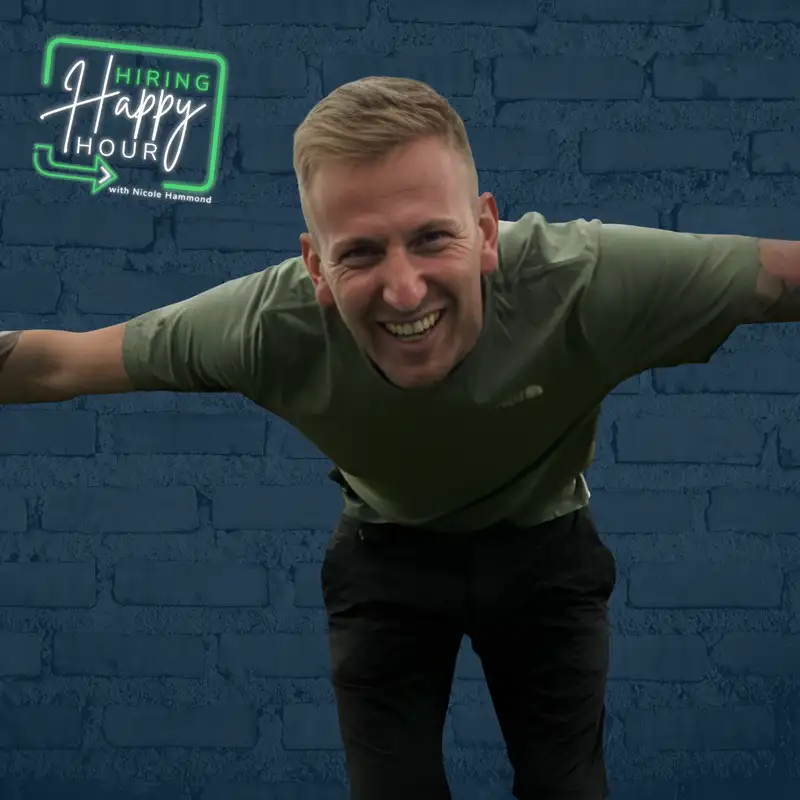
HHH_Christopher Bailey
===
[00:00:00] Welcome to Hiring Happy Hour, where we celebrate the human side of hiring. I'm your host, Nicole Hammond, and together we'll pull back the curtain on people shaping the future of work, the innovators, the dreamers, the change makers behind today's hiring experience. These are the real stories behind the dashboards.
From leaders transforming talent acquisition to the everyday moments that remind us why we love hiring in the first place, to connect people with purpose, hiring happy hours. Brought to you by Smartrecruiters, an SAP company, the AI powered software for super human hiring, helping organizations hire faster, smarter, and we're human.
Nicole Hammond: All right, everybody. Very excited today as this is a special guest, a very, very special guest, our first smart shin. but not only that, uh, he could be the most interesting man in the world, only because of his background. He is a unique [00:01:00] enterprise solutions architect in HR Tech who blends software project management, talent systems expertise to drive large scale digital transformation.
I think he has that on a t-shirt. he led operations and excellence at Green King. For those of you in the UK and amea, you've probably heard of him, where he built and managed HR technology, analytics and process teams while shaping the company's full hr, full HR tech strategy. ATS optimization and talent analytics function. And now he has built enterprise scale digital platforms beyond and HR systems pairing technical expertise with a strong focus on employee and candidate experience as the core driver of process improvement today. He is our amazing enterprise solution architect here at Smartrecruiters. Please join me in welcoming the wonderful Chris Bailey.
Hi Chris.
Christopher Bailey: Hi, Nicole. Hi.
Nicole Hammond: It is like we're in a football arena and you hear the entire place cheering for you, especially your son.[00:02:00] Um, when they approached me about, uh, hosting this show, we talk through to have on the show. Um, and I will tell you, you are my first s Martian that I recommended. Um, reason being I just love what you're doing, but also where you've come from. So today I am hoping we can share with our listeners, with our viewers a little bit more about the most interesting man as Smartrecruiters.
Christopher Bailey: Definitely and I feel really honored because there are some amazing smash. And so to be, to be considered kind of that type on that list is, is, is an honor in, in its own right. So thank you.
Nicole Hammond: Yes. Yes. Okay. So we are going to jump right into it. Um, and we are gonna learn about all the amazing things that you've done in the hiring and HR space. So, Chris, please tell me, if you had to choose, um, what would be your hiring happy hour.
Christopher Bailey: honestly, I'm gonna pick two and, and.
Nicole Hammond: Okay. Okay. [00:03:00] Okay. We can do that.
Christopher Bailey: Um.
Oh, within the last five, six years. So I'm thinking Ocado comes for instance Center. So Ocado are big brand in the uk and they are a, um, online that supermarket, grocery online performance, um, organization. But they are now actually larger than just the uk. They are kind of almost kind of global in terms of their offering and the solution that they offer.
So you've probably heard of Kroger in the us. They actually, man, they actually manage and handle all of their, um, customer fulfillment through their grocery delivery and kind of solution. So, and that's part of their kind of tech stack, but less about that. When I kind of moved into Ocado and I joined there in almost like a center of excellence type of role, and when I joined it was very fragmented.
So they had a very [00:04:00] fragmented tech, tech stack. So Ricardo, uh, when I joined were less than 20 years old as an organization and very kind of tech rich in terms of, um, their kind of forward thinkingness, certainly with kind of how they approach that because that kind of last mile delivery with the customer.
Hr, like most organizations like that, is somewhat left behind, but because they had. That fragmented HR tech stack, they actually have three separate recruitment teams, three ATS solutions, callus greenhouse. You can, when I say fragmented, you can really see that. Um,
Nicole Hammond: We hear, when we hear that, we're like, oh my
Christopher Bailey: yeah, of course,
Nicole Hammond: consolidation, centralization. Okay,
Christopher Bailey: exact. So, um, very decentralized process in kind of operating model, but centralized process. In kind of every other kind of model and within certainly their kind of IT engineering, which actually was probably about 50% of their recruitment at the time. So I was brought in to look at their operational functions to be able [00:05:00] to, to be able to kind of piece together what could be like a centralized kind of recruitment process.
I. After about three months, I've kind of worked with an amazing manager. Um, I wanna give a shout out to, to managing the banks. She really kind of pushed me to kind of always be the best version of myself and really kind of challenged me in terms of making sure that we partner with the organization and that's kind of what we did.
So it was very, it took Alon of working with Alon of resource planning, working with their operational teams, um, their centralized and decentralized develop recruitment functions. To really kind of get under the skin and strip away. Those kind of fragmented layers and to understand kind of, okay, what are the end goals in terms of what they need to achieve from a recruitment perspective.
But the operation was all about kind of throughput. So it was all about kind of how we can achieve that kinda last mile delivery to the customer and what resources required to do that. So then what we started doing then is really kind of unpicking the [00:06:00] technology that we had. We knew for a fact that three 80 s solutions is not the way forward and we need to go down to one solution.
Um, as well. At the same time as that, they were also looking at a new HR solution because they had a, cus they had an in-built HR solution, so custom can't grow with that. Can't evolve with that. One of their recruitment and ATS solutions was also a kind of custom in-house developed solution. So we kind of knew that, You know, that ruled out immediately for obvious reasons.
Um, from a HCM perspective, they were looking at that first because they did want to look at a, um, kind of single suite solution whilst they were there. So they did wanna do that. Um, so, and then when we were looking to throw everything, Workday went out. So it was, it was Workday as, as the kind of the, the, that kind of single suite, uh, solution from a, from a HR stack, what was very quickly established when we were looking at the centralized versus kind of decentralized process.
Is that one system can't do everything for them. They're layers of recruitment from [00:07:00] a head office engineering it versus hands-on kind of operational kind of thinking. Delivery drivers, warehouse operatives. Um, you're talking 20 to 30,000 kind of hires per year across the organization. One system couldn't do that because the processes weren't supported.
Um, what we did do though, is we did find a, a single solution that, that would do that, but from an integrated solution, so a single recruitment solution.
Nicole Hammond: Okay.
Christopher Bailey: what we did then is we got the three recruitment teams to kind of work together and instead of then allowing, instead of kind of allowing the resource planning.
So really kind of factor in what the recruitment needs were based on operational forecasts. We were allowed, we were able to then work with and lead resource planning to actually look at the recruitment KPIs for the forecasts. So after implementing the decision, fast forwarding an awful lot here, but after implementing the solution, we were looking at kind of six figure savings, um, just from the impact of efficiency alone, and then from the [00:08:00] tech stack that we put in from a recruitment perspective.
The ROI was achieved in last three years, so I appreciate there's, there's Alon that's happening between there. And the reason I've kind of fast forward is I do want talk about the second piece as well and it kind of moves onto that in terms of my one, number two,
Nicole Hammond: on. Hold
Christopher Bailey: come back. Yeah, we'll come back to, to the other bits as well.
But from an point of view, um, it was when we were then looking at that, that that centralized versus decentralized. Um, what the, the bigger aspect that we found in terms of how we achieve those efficiencies was, was sometimes the opposite of what organizations are doing to achieve that is by bringing some of it centralized.
So we were kind of booking a trend every organization that we were working with, so competitors at the time would think of like Marks and Spencer. Think of like Tesco in terms of like customer fulfillment. Um, Amazon as well. They were all going down a decentralized route and implementing technology to have a decentralized recruit model at the time, and that's where they were gonna achieve savings and not have these kind of large core centralized teams.
What we did with the [00:09:00] technology is we, um, pioneered that kind of technology to enable a centralized solution, but without a centralized team of 30 to 40 people to achieve 20 to 30,000 hires. It was a team of like five or six that was achieving that many, but almost like a hybrid centralized solution where you would still get that kind of, that hiring manager decentralized touchpoint, um, but with a full centralized support.
Nicole Hammond: Okay, that's Alon to unpack, but I think that you and the shout out to your manager should be very proud because one, she sounds like Ted Lasso and you are the best version of yourself. Uh, but two doing. Decentralized to centralize is not an easy feat. You can attest to that. In addition, it is not the norm or the trend at the time.
So not only are you doing, and I don't want to devalue, but basic change management, right? People process technology, evaluating current state, future state. Where can we, You know, [00:10:00] find a system that meets 80% of our needs and truly put that in, starting with sweet first. Workday fine and dandy, and then integrating accordingly.
But I think the piece I really wanna touch on is something for our listeners that they may be afraid to take that step to go against the grain when it comes to doing something differently through that period of. All that ROI that you achieved, how did you gain the trust of the organization to trust you to make a decision?
That would, we would call going upstream, but then what milestones or proof points did you give them to keep them, You know, invested advocating for doing things a little differently?
Christopher Bailey: That's a really good question. And at first I can honestly say it, we, we had to challenge the operation. We had to challenge them in terms of that change. So, um, at ACA it was already, everything was operational led.
Nicole Hammond: Hmm.
Christopher Bailey: so hr, it, it wasn't a case of having to bring. [00:11:00] Um, HR or the recruitment teams, um, on board that they, they were not resistant to change.
Absolutely far from it, they were embracing the change and probably would've embraced anything at that point because it was so fragmented And so kind of decentralized.
Nicole Hammond: I'm sure.
Christopher Bailey: The operation though, had control over this process.
Nicole Hammond: Hmm.
Christopher Bailey: Decentralized. Um, and when, when you are then talking to an organization around that change, and then, okay, we're gonna remove some of that control from you and we're gonna kind of bring it up here, but in doing so, we're going to achieve all of these different efficiencies.
At that time, it's just numbers on paper
Nicole Hammond: Yeah.
Christopher Bailey: it's not all that meaningful for them. So there was an awful lot of challenge and with some, there was some friction, professional friction, but there certainly was. Um, what we did, we were able to do though, is very quickly kind of partner with some key stakeholders and then partner with the operation and the organization to really kind of show and showcase, um, how we're trying to move forward as a business, how the business is [00:12:00] growing and if we don't.
Evolve not just the tech stack, but the ways of working. Um, then we are never gonna be able to achieve the efficiencies that you need. We're never, you are constantly gonna be going through resource planning, looking at your operational needs based on how many orders you've got to fulfill, and that's what we're gonna do.
So you're never ever gonna change. So unless we actually look at how we can improve and then change on looking at the recruitment KPIs. And be able to bring it in as a centralized so that you've got the professional, the professional aspect within the organization owning what they should be owning.
You're never ever gonna be to achieve efficiencies.
Nicole Hammond: And this is key. I hear two things and I think they're very powerful. And again, sometimes not the norm. First and foremost, find the doers in the company, right? Find who is going to be your linchpin to help you achieve this, um, work side by side. It's almost like selling the value to them of a. in it for me, right?
And then work by with them. Then to your point, find the other stakeholders. So it's almost [00:13:00] like stakeholder engagement at different levels, right? You have that core one that you are just working side by side. We're gonna save you time, we're gonna save your money, we're gonna make your life easier. And then you have that group of stakeholders around the business to kind of expand that model.
But the second piece. Is my favorite because I think people are afraid to talk about this. What happens if you don't do this? Right? You and I both know in today's world we talk about an ROI calculator. It's like, oh, time savings, depending on who you're talking to, C-E-O-C-F-O, these, You know, metrics.
But I think my favorite is if you don't do this, giving the proof points of the financial burden you will have if you get left behind. Um, so. Real quick. I know we wanna switch to the other favorite, and I do too, but what were some of those metrics that truly resonated with those stakeholders of, if you don't invest in this and get on board, you are going to x.
Christopher Bailey: For the operation. It was, it was based on, it was all based [00:14:00] on their, on their kind of headcount planning. So all of their headcount planning was just based on numbers. It was just purely based on often churn. So you, you brought like the, the business has brought in 30 this week and we're gonna lose, we know we're gonna lose 25.
And, but you don't know that because it, it is just based on how many orders a customer is going to fulfill in, in a given week. And it's based on kind of forecasting on previous orders to know what you're gonna have. And, and that's where from an organization, they were very tech rich. So they had some fantastic systems that were able to forecast and predict.
The, the level of throughput and customer orders and fulfillment that was required on a daily and weekly basis. And they were very, very accurate with that, which went that they knew what that headcount needed to be to achieve that. And often it was all about a ramp up to kind of seasonal holidays, Christmas being the biggest wire country mob.
Um, but it was then. But it was all based on that, that trend of, oh, we know we're gonna lose this many, or we know the [00:15:00] recruitments like this, like the recruitment does. Well, actually, no, if we, if we stop, if we can fix it here at the start before actually factoring what happens at the end, as soon as we fix what happens at the start, all of a sudden that scale as opposed to just going up, down, up, down each week, you can actually just have a slide in line and then all of a sudden the effort that needs to be put in at the start.
Actually lower. So then all of then straight away, you're gonna achieve the efficiencies 'cause you've got time saved here and time saved at the start. And also.
Nicole Hammond: Well, kudos to you because that is quite an achievement. Um, we work with many organizations that have that conundrum of decentralization and the debate to go centralize, but they feel it's. More of a burden than it's worth. Um, I think today you've kind of made that a misnomer and it's totally a possible if you're the best version of yourself, plus the most interesting man in the world.
Plus you have your advocates. Alright, let's switch to your favorite number two.
Christopher Bailey: favorite number two is, is, is, is [00:16:00] probably my actual favorite. It's probably favorite number one, but I, I kept it to the end. Um, and that was my time at Green King, which was the, the position that I held just before I became a smart. And when I joined Drinking King, it was a million miles away from where I'd previously worked at.
Very old tech stack, very kind of outdated internal tech systems. No way. Didn't even have a way of collaborating with teams. No SharePoint, no teams, no Slack, no Google Meet, nothing. It was email. It was email and carrier.
Yeah, sometimes, sometimes the character pigeon could get there before the email as well.
So it was, it was like, now it's. It isn't like that now. Um, so Green King are, are a UK only company, um, but a very, very old UK only company. Like I, I'm talking, do You know, 200 years old or almost? I can't remember the exact dates. It may, may be older than that. I, I really can't but Google it. They are started in a place called Bar S and they started as a brewery, [00:17:00] uh, brewing their own kind of A and b and they still do that today.
Um, but now they're
no more of a hospitality company throughout the uk. So over 3000. Um, establishments, um, throughout the UK look up and down the country. Um, but when, so when I joined, they had a, as I said, very old tech stack. Um, no as mentioned, no kind of real way of, kind of collaborated with teams. But they had a matrix recruitment model, PEs I describing as a matrix recruitment model, which meant that they had teams in silo across.
An organization in a single country all recruiting for the same type of skillset. All in different teams, almost kind of brand led. So Green King has got 14, 15 kind of unique brands, kind of hard brands. Um, and it was all kind of brand led recruitment. Um, and, And so maybe some of it was kind of regional, so like urban, kind of bigger city recruitment.
But it was all the same skills. So [00:18:00] they're all kind of fishing in the same pool really in terms of that skillset set that they want. Now, Lindsay Stone, who is still drinking, she was my manager there. She was kind of like head of um, kind of head of ta, I can't remember exact job type of, but again, very kind of instrumental in shaping the operating model.
Some somebody that I still stay in contact with today absolutely loved working with, and she won. A massive kudos to her. Again, another person that really kind of pushes you to just be the best version of yourself, and she's Lindsay's very good at surrounding herself with people in the room that are the experts.
She doesn't tend to be the, the, the smartest person in the room because she doesn't need to be surrounds herself. This, but Lindsay is very, very smart. She really, really is.
Nicole Hammond: She sounds smart.
Christopher Bailey: What I was going back to. So in terms of that, so she was there to really kinda shape the operating model, come away from that kind of matrix recruitment, um, and have a, have it where she was kind of [00:19:00] more strategically aligned to the point that then it eventually kind of transpired in terms of what she was trying to achieve, whereas that, um, she would, it would all fall under her from, from a TA point of view.
Again, I was in that kind of center of excellence for role. So my task and what I was actually brought, recruited, and brought on board for was to solution a tech stack that would support that model. So again, all within kind of, And so wider hr, so not just ta ta and kind of hr. Now what we, when I, when I first joined, um, I'm trying to think about the February time.
Um, and I'd been having conversations, uh, with Lindsay during kind of my, my notice period because they were going through a kind of that, that initial qualifying process of vendors and providers. And so she was keeping up to date with that sharing kind of insights in terms of what they, the very, very kind of early stages.
Almost kind of long list down to short list, that type of process. Um, but what was happening and when I [00:20:00] joined it was like, right, we need to move very quickly. Now. The decision at the organization, um, when I joined at Green King was, we want, we've got a, we need a new HR system, so we need a new HCM. Um, but it feels like ta um, recruitment, there's a burning need for recruitment to go first.
Can you go and validate that please? So we did that. We validated, we did various different bits within the organization looking at, from a technology point of view, it was like purely from a technology point of view, and it was quite clear and quite abundant straight away in terms of the system that they had in place that we just couldn't do anything.
I was given a list of kind of quick wins that we could achieve with the existing system that was in place. And honestly, if there was 20 on that list, we may have achieved three. And that was purely the fragmented kind of configuration of that system. Um, okay. Look, it, it is true. There is a burning need two that needs to go first because again, we can't support the growth that's needed.
So then what [00:21:00] happened is we go out and do this kind of robust process of, um, kind of scoring and meeting on all the providers and its provider was with a list of HCM providers and standalone kind of best in class ta. The business work was we want, we are going, um, for single suite. That is what is happening.
The, that is the boardroom. We are going single suite. Let's go and find one.
Nicole Hammond: people do that, right? They do one single suite because it saves money. I'm doing quotations if you're listening.
Christopher Bailey: That's what they were doing. But TA got, TA needs to go first. So let's ask every HCM provider. Can you implement TA your TA module first? Of course, not a single one can call. HR needs to go first before they can do ta.
Nicole Hammond: Yep.
Christopher Bailey: okay. An interim solution was then born out of that, and the interim solution of Smartrecruiters was born out of that process.
Now, Smartrecruiters was one of the kind of best in class TAs that were part of that vendor, and they came out on top. Easy to say.
Nicole Hammond: I mean, we're happy about that, right?
Christopher Bailey: [00:22:00] I'm.
Um, so what my job then was to kind of gather all the requirements, both functional and technical within kind of Green King and then lead on the implementation project, both with the IT teams and with the functional teams. These are the Smartrecruiters kind of implementation, and it was always going to be a kind of an island a an MVP minimum viable product.
Because it was interim solution. We're not gonna connect it. No integration. To hr, the HR system, 'cause that's going away as part of the qualifying process when we were speaking to all the HMS and kind of the, the TA suites. We were able to pick Smartrecruiters as TA and Workday as hcm. We like great. We know we've, we've picked them absolutely fantastic.
But Workday is saying we've gotta, we've gotta do two years worth of work before you can get the Workday recruiting so you can have, so go and have Smartrecruiters for two years. That's what the board, that's what the business said. So that's what we did. Um, October was around about the project start.[00:23:00]
Following May was kind of go live. And when you think Green King hospitality, there's a big lockdown and a shutdown down every Christmas. You can't touch operators, you can't do anything. So you were, realistically, you was talking probably about five month implementation for a organization of 40,000 employees and 15 different brands, which was great.
So it was, do You know what? We were on track when we achieved what we needed to do.
Nicole Hammond: I just wanna repeat that, Chris. 40,015 brands. And six month timeline versus the two years that Workday Recruit gave you.
Christopher Bailey: Exactly that. Yeah. Look, Workday Recruit was two years because they had to implement, um, core HR
Nicole Hammond: Fair enough?
Christopher Bailey: Green King said we've got to have payroll in place
Nicole Hammond: Sure.
Christopher Bailey: this date. So it was kind of dictate by both. So little bit of kind of caveat there, but yes, you're
Nicole Hammond: Workday and payroll is the number one thing you need to have, right? We
Christopher Bailey: exactly.
Nicole Hammond: employees.
Christopher Bailey: Exactly, yes. So that, that was more important. Paying employees as opposed to recruiting new ones was important to the business and I can understand why. [00:24:00] Thanks. Thank you very much for that. Um, so when, so fast forwarding down to six months, Smartrecruiters has been in place now for six months. So we've gone forward a year.
Workday have gone through their whole kind of scoping, gathering, functional technical requirements for their core HR and their kind of payroll solutions. Next on the list was recruitments. So it was okay, what recruitments in scope and we're, we're moving into to, to let, let's start gathering these requirements.
It was very early to see that there was a huge kind of gap in functional requirements.
Nicole Hammond: Hmm.
Christopher Bailey: What the business had been as adopted for six months and used as a minimal viable product. Well, Smartrecruiters wasn't operating at full functionality at this point. Um, it wasn't, there was kind of aspects and elements to that that, that, that weren't probably being used to its full entirety.
Um, so we, why my job now was to complete both a functional and a technical gap analysis. And then presents the [00:25:00] findings initially to kind of our HR leadership team and kind of factual findings. So we were very looking, we were looking then at not only kind of the functional aspects that you would lose both from a recruitment and from an operator, um, perspective, but.
Are there any technical limitations? Um, by technical limitations, we were then looking at things like Smartrecruiters plug into the marketplace. CRM attracts from a career side perspective and kind of those efficiencies in terms of what that landscape would look like. You always get within a non-technical environment, you always get somebody that will come up and say, well, look, our HR architecture will go from one system to two if we have marketers.
No, it doesn't. Never, ever, ever, is it one system or two, because if we have. You've still got your single sign solution. You've then still got an integrated middleware out to whatever kind of, um, kind of background checking providers that are part of marketplace. You've then got some kind of push out into kind of job boards.
You've then gotta push out into, into your career site. So it's, it's, so when you then articulate to say, well, instead of thinking [00:26:00] of it as one versus two, it is probably five versus six. So all of a sudden it's like, oh, I didn't realize if we had Workday, we'd still have another four systems and solutions to be able to support that.
So the argument then actually kind of waters down a little bit. Um, so when we do that and we come within, then that, that kind of gap analysis is there and we're presenting that. What we noticed from a tech stack point of view was a, an a, a cost efficiency. So we could kind of immediately align in terms of, okay, it would cost x.
To keep Smartrecruiters in what we've got today versus why if we move over to kind of to, to workday. Um, and they were kind of stacking up. There weren't a million miles kind of away from each other, so I was like, okay. So yes, one, it's not a fact Alon, but again, from an efficiency, from a functional efficiencies.
One was massively weighing out the other, so we presented that then at board level, um, which I had to do to be able to be signed [00:27:00] off kind of Smartrecruiters. They then dug Alon deeper into the operational efficiencies and said, can you come back and can you really articulate actually how much time it takes to do this versus this?
Okay. What financial gains are you getting to? We then went back and there was probably about two or three rounds of kind of going through this because they were like thinking, okay, actually this. Something to be had, and I was, I was being, so I immediately thought, do You know what? It's never gonna work.
They're just asking for more and more and more. Are they doing this to just validate? Workday themselves? Is that what they're trying to do? And I was then very, very kind of reassured, said, no, they're not. So this is happening because they're actually taking you seriously. Thinking
Nicole Hammond: great.
Christopher Bailey: smart Smartrecruiters is probably the solution that we need kind of internally and, and maybe some of us ran the room, we kind of wrongly thinking that full suite is, is the way forward.
And in doing that, that happened. Um, what we then achieve and what we did show as well, was, um, from an operating model. In the first six months alone of just Smartrecruiters. [00:28:00] So you, you're thinking kind of the core, core central, that matrix team that then became a fully functional single team,
Yep.
there was cost savings there already in the six figures.
So it was like three 50, just in six.
Nicole Hammond: Wow.
Christopher Bailey: was
Nicole Hammond: And that's the functional only, right? You hadn't even connected. Okay.
Christopher Bailey: And
so we could prove that we actually had tangible. Data that showed that this, this wasn't forecasted savings. This was proven savings in six months. So then when we kind of. Long story short is Smartrecruiters was then signed off and that was signed off as the recruitment platform alongside Workday as kind of the core kind of HR and PCM payroll and everything else.
So I then immediately was like, right, thanks Chris. Your job now changes. Your job now changes to On the Workday project as an SI and integrations lead.
Nicole Hammond: Congratulations. You gave yourself more work, Chris.
Christopher Bailey: Oh, brilliant. Thanks much. What? Yeah, what? What do with my other data? You keep doing that one as well. So, and that was around like the operational [00:29:00] efficiencies and excellence within the system and continuous improvement.
Nicole Hammond: the expert.
Christopher Bailey: Wonderful. Thank you very much. And, and they were long days. They were fantastic and I absolutely love them. I then worked, um, on the integration and built and worked with, um, app partners and Smartrecruiters on building that kind of integration into, into Workday. And then I left Smart. I left Green King and joined Smartrecruiters after that project was completed in December, 2024.
And so,
Nicole Hammond: Love it. it.
love it. Lots to unpack because I think that this is a common topic, right? Not only sweet versus best of breed, but the cost savings. There is this huge misnomer in the world that less systems will save you money.
Christopher Bailey: Hmm.
Nicole Hammond: and one to your point, systems isn't always the case, right?
Suites try to sell. All you need is them. And for some individuals that may be true. But the reality is, to your point, today's [00:30:00] world is made up of, experts, best of breeds in many different areas. Job boards, background assessments, career sites, et cetera, et cetera, et cetera. And the reality is, is you really need to look at your tech stack and strategize around what you need versus want and what works effectively together. Um, I think that when you told me this the first time, not only did I love your honest. Assessment because I mean, even today you're saying, right, like from a cost perspective, it wasn't far off, but just the reality of continuously doing what's best for the organization. As you shared out how much saving with functional alone, then I imagine the technical implementation was probably a shorter timeline than you would expect from a workday, et cetera.
Christopher Bailey: Yeah.
Nicole Hammond: And then. Right. I think Alon of people forget about continuous optimization. We hear from a number of organizations that go with an avature or a workday that they just [00:31:00] become stagnant in
Christopher Bailey: Yep.
Nicole Hammond: built originally. the beauty of Smartrecruiters, and yes, I'm totally plugging it, is the continuous optimization, the open APIs, the self-development, right.
Christopher Bailey: Yeah, completely. And those are the conversations that I love having today. So, like in my job now, and it's some of those conversations that, that even, and that surprises me even today, amazes some of our kind of customers and prospects that we speak to, to say,
Nicole Hammond: Yes,
Christopher Bailey: oh, I, I actually have the keys to my own smart instance.
I said, yes. I said, you, you are your own system administrator. You manage your own continuous improvement to your own release and your own change management cycles within your own own organization. We don't need to do that for you. No, we can, if you don't have the capacity internally, we've got that model to support you.
Fuck, you don't need us to do that. And that's, and that, that was one of the biggest kind of selling points around smart groups at Green King and why it was so widely adopted. They'd gone from a system that they couldn't change. I had a list of 20, I mentioned 20 [00:32:00] quick wins with their existing system, uh, which was Cornerstone.
Don't remember wrong with Cornerstone at all, but, but it was how it was configured. And
Nicole Hammond: sure.
Christopher Bailey: it was almost, what they created was like a cottage cheese mess of, of kind of, if I change something over here, it impacts these three matrix teams over here, and I don't want it to do that. But, and it was just so interwind, we could not unpick it to the point that the vendor then was like, well, we can't really support you either, because we're not quite sure the mess that you've made yourself.
So we just couldn't do it. And then all of a sudden we go to a Smartrecruiters whose technology isn't built that way. It's almost impossible to be able to kind of replicate what we had to an org to then recruitment teams and operational teams saying, oh, it wouldn't it be good if we could do this.
Nicole Hammond: Even now seeing it in the world of being part of a suite with SAP SuccessFactors, um, there are so many people that are excited because I think the future is continuously being able to keep up, right? Like if I were to put a theme on the successful technology [00:33:00] companies that are gonna do well in the future, it's, they can keep up and they are ahead of the curve with innovation. And these larger suites are gonna have a hard time because they are so large to go through a pain of change to get to that point. some stakeholders minds may not be worth it. But on the other side, I think a, a nimble organization that's small but mighty, but has always had that habit of innovating and going through that change.
I won't call it pain because it's natural and
Christopher Bailey: Yeah.
Nicole Hammond: know this, right? Build a plane while doing it. Uh, but it, it helps to continuously optimize and not make yourself outdated. Um.
Christopher Bailey: And, and sometimes certainly. And what we definitely found with the, the kind of the, the kind of the suites is that from a TA aspect, and, and often it's, it's, it's the modules. It's, it's something that. The, the releases within ta they're wedded to the whole kind of HCM kind of core kind of release schedules.
It might be quarterly, it might be annually, it might be kind of every [00:34:00] half recruitment moves too, too fast for that, like I said, and it does, you want, you want kind of monthly release cycles and monthly kind of updates, um, and efficiency kind of updates and, and kind of add on because that's how quickly the, the market changes.
Nicole Hammond: Yes, yes. And to
Christopher Bailey: Yeah.
Nicole Hammond: with competition and get the best
Christopher Bailey: Yep.
Nicole Hammond: candidates and hires, this is what you need to do. So. thank you. We could talk about this for hours. This is my favorite topic of, You know, sweet versus best of breed, but also everything that comes with it. Having your technical mind and speaking to that side of this, I think really brings a breath of fresh air.
Last piece on this, you presented to the CEO and the board. That is a big deal. One, give yourself a pat on the back because I, I think you minimize how amazing that is, that you were so passionate and they saw that to the point that you told us, right? Are they questioning this just to do their due diligence and they're gonna go with Workday from a political [00:35:00] perspective, or do they really care? Um, and you influenced that because you cared so much. So just kudos to you and thank you. Um, you should be very proud of yourself for that.
Christopher Bailey: Thank you. Thanks.
Nicole Hammond: Yeah. Good. Good. Alright. We are going to switch gears. Um, although, You know, you and I can talk about this more, uh, forever and ever and ever over beers, right? Uh, hiring happy hour, but we're going to switch to learn more about you, uh, and what brings you bliss or makes you smile outside of work, right? Um, so share with me more, share with me more about what does that happy hour look like for you outside of work?
Christopher Bailey: You know, I'm gonna continue with the theme of two things, because that's just me. Um, but no, there are two things I really like. So I would say what brings me bliss is what I used to unwind, and that's going to the gym. So I'm, I'm not somebody that can go to the gym in the morning.
I, I'm not, um, I go to the gym after work. Occasionally I'll go in the morning if [00:36:00] I know I can't fit in.
Nicole Hammond: are not four
30 like me.
Christopher Bailey: no, not there. There only 1 4 30 in the day and it is not 4:30 AM.
Nicole Hammond: Fair enough, Fair enough.
Christopher Bailey: The only time I see 4:30 AM is when I didn't get to bed.
Nicole Hammond: Okay, fair enough.
Christopher Bailey: So, yeah. Um, so I'm not, I'm, I'm not somebody for the gym in the morning, but I lo I go to gym five days a week. Um, I, I, I live and kind of breathe into that, and when I don't go, I'm, I'm restless. So, and it does bring me gliss and it helps me on why. So the reason I like to go at the end of the day. Um, regardless of what time that is, it could be kind of 5, 6, 7, 8 o'clock, whenever that is, whenever the end of the end of my kind of working day is, it helps me unwin, it helps me think about the things that I might still need to do tomorrow or go get back.
And it's, there's a number of different things and, and, and it really, really works for me because then I can come back, then I can switch off and I think it's very much the working from home. It's, I, I step out of my [00:37:00] office and then I walk through a room and
Nicole Hammond: Get
Christopher Bailey: I'm, I'm in the kitchen, I'm in the living room.
So it's just like there's no separation. That kind of, that, that kind of gives me that separation as if my day's over. Um, the second part of the, of what brings me bliss is coaching my son's football team or soccer team for those in the US and I.
Nicole Hammond: Yep.
Christopher Bailey: Absolutely love it. So my son is, he's 11, so he's 12 this year, mate.
And, um, so he's under 12 football team and we, I absolutely love it. It brings me so much joy to work with. 12 kind of young lads and just to see them nurture, to spend time with them and to, and, and you wouldn't be like, I, I'm like a, I'm a complete, I say a different person. I'm probably not actually, I probably bring what I do in work, I bring into my football coaching as well, because I have books, I have apps.
I kind of literally record all the training drills that I do. I've got spreadsheets of kind of how many games that they've done [00:38:00] and how they played, how many golf. So I, I, I'm very kind of articulate like that when, so I make sure if I'm gonna do something, I'm gonna do it 110%.
Nicole Hammond: Thoughtful,
Christopher Bailey: I never
do.
Nicole Hammond: Love it.
Christopher Bailey: I'll never do 90% of anything.
It's hundred, 10% or nothing. So I'm exactly the same. Um, to the point that I think that sometimes I might be a little bit above my station and I need to remind myself I am a kids football team. I'm not, I'm not actually coaching a Premier League football team.
Nicole Hammond: Maybe. We'll have to figure out what the pay is for a premier coach versus Smartrecruiters. Right. Uh, I mean, I love this of course, passion, soccer, football, and exercise as that mental just decompression. Uh, I think there's Alon of people out there that can attest to something similar. Um, tell me what is your favorite. Slogan, words of encouragement for your son [00:39:00] and his team, it's going into a game, going into a practice after practice.
Christopher Bailey: Oh wow. Okay. Um, the one thing that I do say an awful lot is, is, is, is don't get dragged into the opposition's way of playing. And I say it Alon and I say that because we're, I, I, I really kind of promote our team to, and I, I, I, I've put into to. To, to, it's a bit of a cliche to play proper football, so to kind it, it's a team and to enjoy it.
Um, and by that look, we've been together a while now, so it is, it is all about kind of, we like to play quite stylish football. We like to think that, that we're quite a good team and, and, and we are. Um, but of course there some oppositions that, that, that you come against, especially now that kinda reach high school and kind of hormones are kicking in at that age.
And, um. I just make sure that I always say to them, don't get dragged into the oppositions of playing football. Let's play our football.
Nicole Hammond: Yep.
Christopher Bailey: And I always say that
every single day.
Nicole Hammond: Yep. I love that. I love that. Um, Ted Lasso [00:40:00] 110%. Play your own game. All those motivating things. All right. We are going to switch gears to a game called this or that. you heard of it?
Christopher Bailey: Yes.
Nicole Hammond: Okay. so we're gonna go through a few. I have some tech related ones, so we're mixing it up this time. Uh, but yep. Choose your favorite adventure and then we'll go from there. Alright? Uh, resume or LinkedIn profile.
Christopher Bailey: LinkedIn profile
Nicole Hammond: Okay. AI or no? Ai.
Christopher Bailey: ai.
Nicole Hammond: Okay. Find me or find you.
Christopher Bailey: Find me.
Nicole Hammond: Okay. internal mobility or external best athlete hire.
Christopher Bailey: Internal mobility
Nicole Hammond: Okay. Uh, reward or recognition.
Christopher Bailey: Recognition.
Nicole Hammond: Uh, good manager or fun job.
Christopher Bailey: Good manager.
Nicole Hammond: Centralized TA or embedded recruiters.
Christopher Bailey: Ooh, [00:41:00] both work if done right.
Nicole Hammond: I love it. Okay. Uh, tech related, buy or build.
Yes. I wanted to hit on this when we talked about they had their homegrown systems.
Christopher Bailey: Yeah.
Nicole Hammond: just saying it to say it, we all know we live in a world that's going too fast. As we said, keep up and having your own homegrown, the investment in keeping it up to date, virtually impossible. Right.
Christopher Bailey: Let somebody else build it's
Nicole Hammond: Okay. with one region or global rollout, day one.
Christopher Bailey: rollout, having both.
Nicole Hammond: bold, bold, big bang. All right. Uh, global consistency or local flexibility.
Christopher Bailey: 80% global consistency with some nuance with 20% flexibility.
Nicole Hammond: Uh,
Christopher Bailey: So, blueprint.
Nicole Hammond: outta my mouth,
Christopher Bailey: Blueprint with some, yeah.
Nicole Hammond: I'm with you. I'm with you. No one asks me these questions, but I'm with you. [00:42:00] Okay? Uh, text updates or email updates.
Christopher Bailey: Text.
Nicole Hammond: All right? And the last one, uh, beer or wine. All right. And do you have your beer?
Christopher Bailey: I do. I have.
Nicole Hammond: Look, I have to show you. these fun little glasses we got. Oh, and you've got your Green King. And I will tell anyone that is in the uk. Um, I went to my first Green King pub. What'd you tell me? The Glau
Christopher Bailey: The Gloucester
Nicole Hammond: Gloucester? Yep. See, here we go.
Christopher Bailey: one.
Nicole Hammond: It was incredible, incredible. I mean, light years above a, above a pub you would find in the us. So Green King, you're doing amazing things over there. Um, and your beer is mighty tasty. So, uh, tell people, Chris, where they can find you. Get ahold of you. Learn more about most interesting man in the world, best version of himself.
Christopher Bailey: So right now you can get a hold of me at Smart Grids, but you can also look, you can reach my LinkedIn. You can look, I, I'm, [00:43:00] I'm easy to be found. I, I don't hide away in, in kind of any corners. Um, but yes, just if anybody wants to reach out, if anybody wants to have any kind of. Conversation or chat over.
You're in the pub Beer coffee.
Nicole Hammond: Oh, I just wanted to say thank you. This has been so special, uh, and I've learned, I hope listeners and watchers out there have learned something, whether it's around how to navigate decentralization versus centralization, whether it's around suite versus best of breed, whether it's about our favorite topic of change management or Ted lasso and being the best version of yourself. Um, thank you for listening. Thank you for being with us and we're gonna cheers, Chris. You're my first. Cheers. Cheers.
And that wraps another episode of Hiring Happy Hour. Thanks for tuning in and for believing like we do [00:44:00] that hiring isn't just about filling jobs. It's about the impact we make. To catch more stories and show notes, visit hiring happy hour.com. This episode was brought to you by Smartrecruiters, an SAP company, an AI powered platform for superhuman hiring.
Until next time, stay curious, stay kind, and keep humanizing hiring. Cheers.